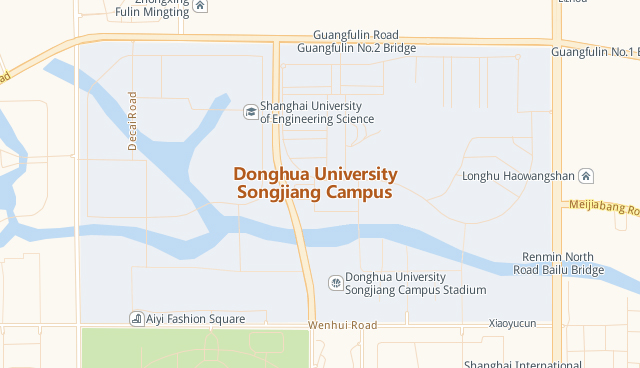
The Chinese imagination of the heavens has, since antiquity, been at once profound and poetic. In the Classic of Mountains and Seas – Chapter of the Great Western Wilderness, it is written: “In the vast wilderness stands a mountain named Mountain of the Sun-and-Moon, the pivot of the sky. The Celestial Gate of Wuju is the place where the sun and the moon enter.” To the ancients, the sun and moon were gates, and the stars were their realm—a mystic and boundless celestial domain conjured from wonder. Thousands of years later, this very romance has been rendered into reality by researchers at Donghua University. They have transformed lunar soil, collected from 380,000 kilometers away, into strands of interstellar silk that are at once supple and strong.
On May 11, China's first experimental fiber sample (simulant) made from lunar soil was sent to the China Space Station via the Tianzhou cargo spacecraft. It will be placed on the extravehicular exposure platform for long-term verification in the space environment. This marks an exploratory attempt by the university in the research of in-situ resource utilization of lunar soil.
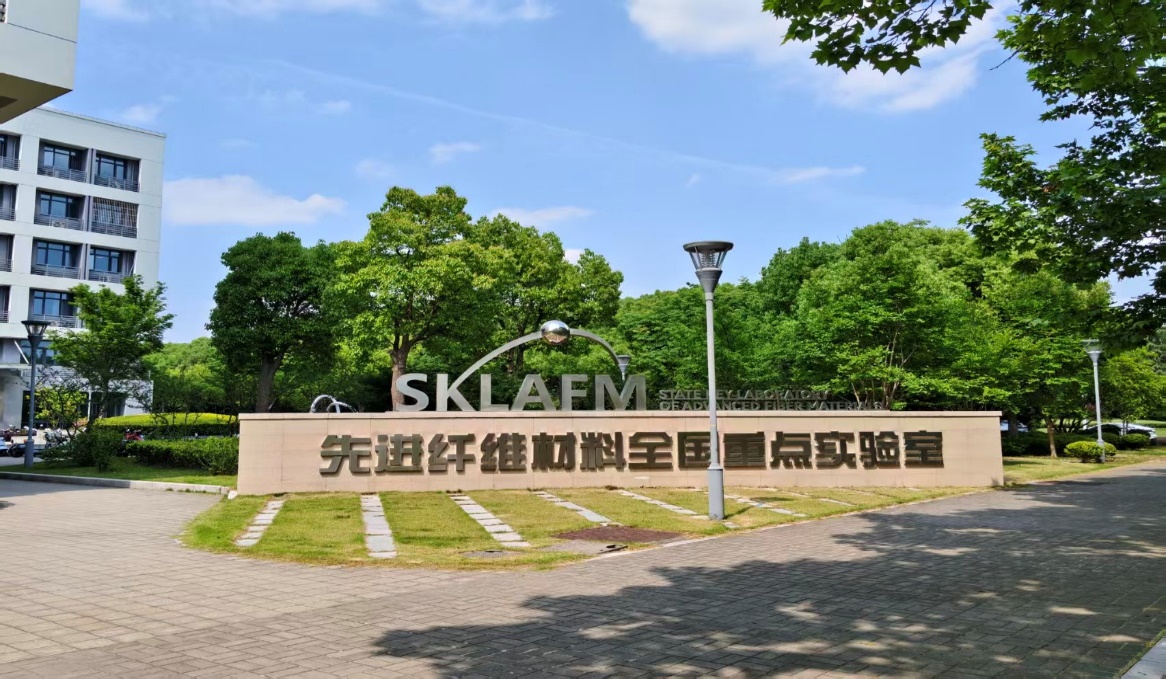
Relying on the State Key Laboratory of Advanced Fiber Materials at Donghua University, the research team has made significant progress in the in-situ fiber formation of lunar soil. Under simulated lunar conditions, they have successfully achieved full-component fiber preparation using real lunar soil. This represents an original and pioneering scientific contribution from Donghua University in support of the construction of the lunar research station by 2035.
Half a gram of lunar soil, a thousand times its weight in value: turning stardust into 'space silk' in the wilderness
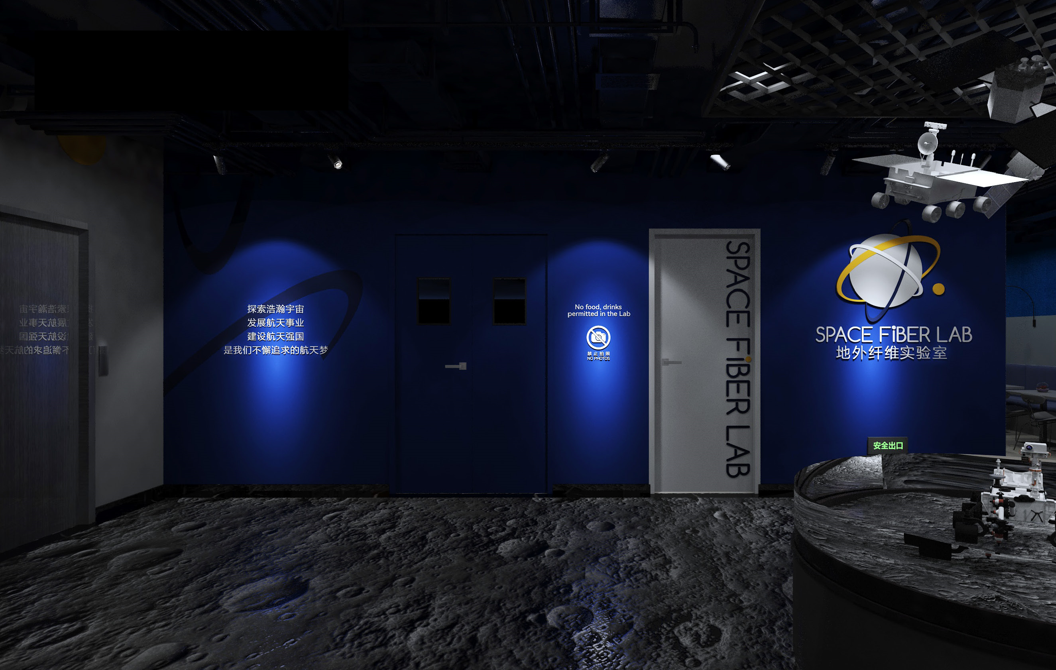
At DHU's Laboratory for Extraterrestrial Fibers, 0.5 grams of lunar soil are carefully preserved. This pinch of moondust, lighter than a coin, comes from the lunar basaltic samples brought back by Chang'e-5. Having undergone billions of years of space weathering, it is immeasurably precious. "Can such a meager amount of lunar soil be spun into fibers?" At the outset of the project, doubts were everywhere.
"No one has done this before, so we will. Even if we can draw just one millimeter, that's success." The words of Cheng Yanhua, a researcher at Donghua University's College of Materials Science and Engineering, were firm and resolute. The team likened lunar soil to "white granulated sugar from space" and drew inspiration from the traditional "caramelized sweet potato" method—a process of melting and drawing fibers. Under high temperatures, they melted the lunar soil into droplets and precisely pulled them into fibers.
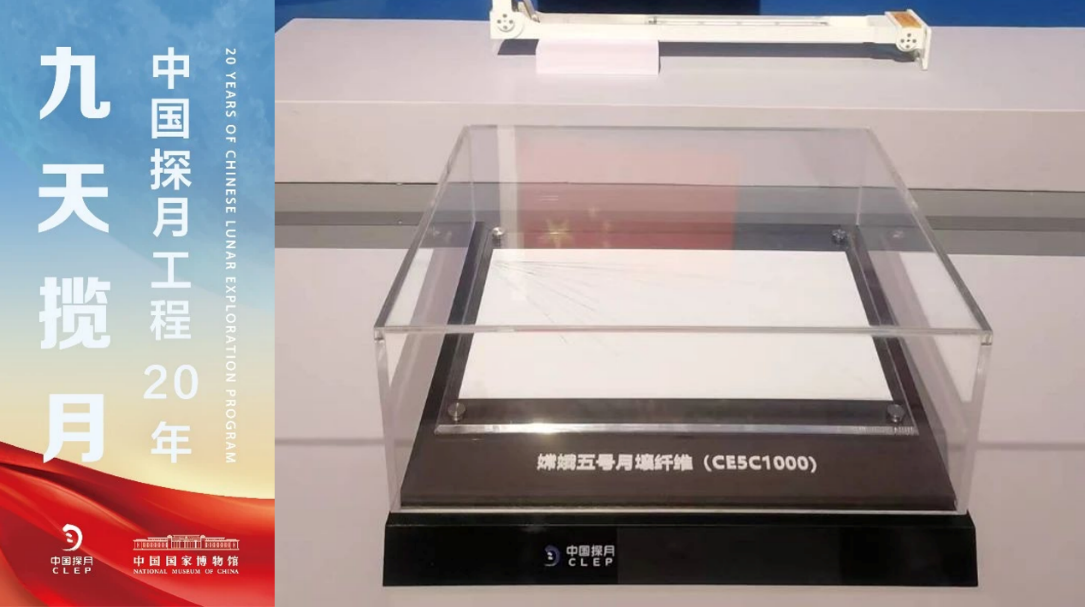
However, the lunar environment—with its high vacuum and microgravity—rendered conventional equipment completely ineffective. With no established technology to follow, they built the world's first spinning device designed to simulate lunar conditions from scratch. Using their self-developed apparatus, the team melted the lunar soil and successfully drew it into continuous fibers measuring approximately three meters in length and just over ten micrometers in diameter—comparable to the thickness of a human hair. On April 1, 2025, the Chang'e-5 lunar soil fibers were exhibited at the National Museum of China as part of the "Journey to the Moon: 20 Years of China's Lunar Exploration Program" exhibition.
A Decade of Relay Effort: Persistence Turns the Impossible into Reality
The breakthrough in spinning fibers from lunar soil was not an overnight miracle, but a ten-year relay race.
In 2016, Academician Zhu Meifang led a major basic research project of the Shanghai Science and Technology Commission. The team started with nanomaterials research and gradually turned its focus to materials for extreme environments. "How extreme can extreme environments be? Why not reach for the sky?" With this simple goal, the seed of deep-space exploration was planted.
"When you truly want to make something happen, the whole world makes way for you." The year 2020 became a pivotal turning point when Chang'e-5 successfully returned with lunar soil. The team, including Zhu Meifang, Cheng Yanhua, Wang Qingwei, and Ding Linfeng, undertook projects under the National Key R&D Program of China, focusing on inorganic fibers and fabrication technologies for extreme environments. From project application to proposal validation, from equipment construction to process debugging, every step was solid and steady. In response to the nation's major needs in deep-space exploration, the team shouldered the mission and kept the goal firmly in sight, step by step advancing "extraterrestrial fibers" from concept to feasibility, and from feasibility to success.
To advance lunar soil fibers from "lab success" to "engineering-ready," the team iteratively developed three generations of core equipment, achieving staged goals including fiber formation from milligram-level samples and continuous preparation under high-vacuum conditions. This core technology, with fully independent intellectual property rights, won the award at the 25th China International Industry Fair for its originality and applicability. The team has long worked quietly and diligently, keeping their achievements within the lab and their focus on the research.
Not long ago, at the "Red Journey" activity of the China International College Students' Innovation and Entrepreneurship Competition, doctoral students Li Lei, Hao Zhuoya, and Li Tengfei from the team spoke with passion: "Building a powerful nation is never just a slogan. It is one generation after another, turning the impossible into reality step by step." From Academician Zhu Meifang providing strategic guidance, to Cheng Yanhua leading the charge, and to the younger generation carrying the torch forward, Donghua's researchers have turned national strategic needs into original scientific and technological achievements through ten years of dedication.
For the future construction of a lunar research station, potential applications of lunar soil fibers include flexible structural materials and lunar concrete reinforcement. Given the high cost of Earth-Moon transportation, in-situ resource utilization (ISRU) is a key consideration in this field. Currently, related research remains at the fundamental validation stage, with some distance to go before practical application.
The current space station experiment aims to obtain fiber performance data under high-vacuum, intense radiation, and extreme temperature differential conditions, providing a reference for future studies. Donghua University will continue to conduct fundamental research in lunar soil in-situ utilization and fibers for extreme environments, aligned with the material needs of deep-space exploration.