Recently, the 64th Milan International Design Week came to a successful close. As the most influential bellwether in the global design arena, this year’s event attracted nearly 2,000 brands from more than thirty countries.
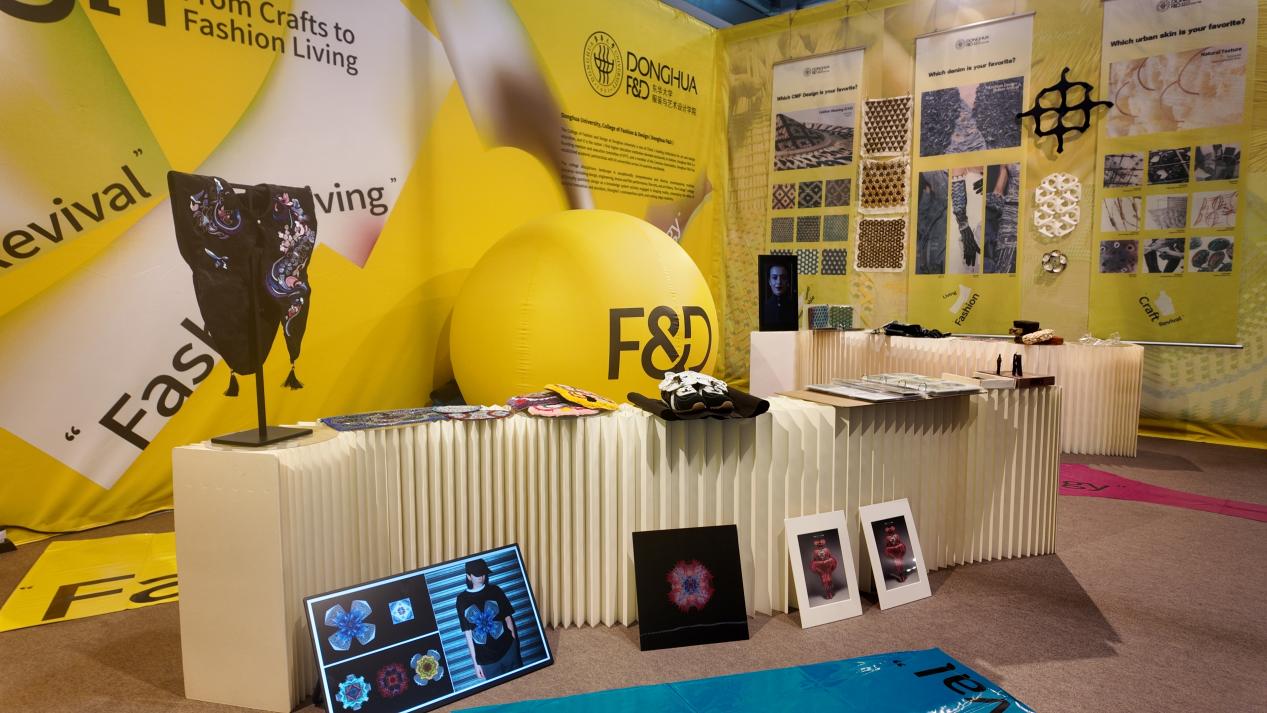
Amid this premier international dialogue on design, a team from Donghua University’s College of Fashion and Design made its debut with the theme “Beyond Design: From Crafts to Fashion Living,” presenting over 100 innovative works that blend Eastern cultural heritage with modern aesthetics, allowing the world to appreciate the solid foundation and cultural confidence of Chinese design.
Intangible Heritage Reborn: Modern Transcreation of Eastern Cultural Lineage, Problem-Driven Design Practice
This Milan showcase represents a systematic and research-oriented international presentation of Donghua University’s design discipline. Led by two faculty members, Tian Yujing and Song Kun, from the university’s College of Fashion and Design, the team brought together nearly 100 undergraduate and graduate students. After nearly half a year of preparation, the exhibition covered a full range of categories including apparel, home furnishings, accessories, and lifestyle products.
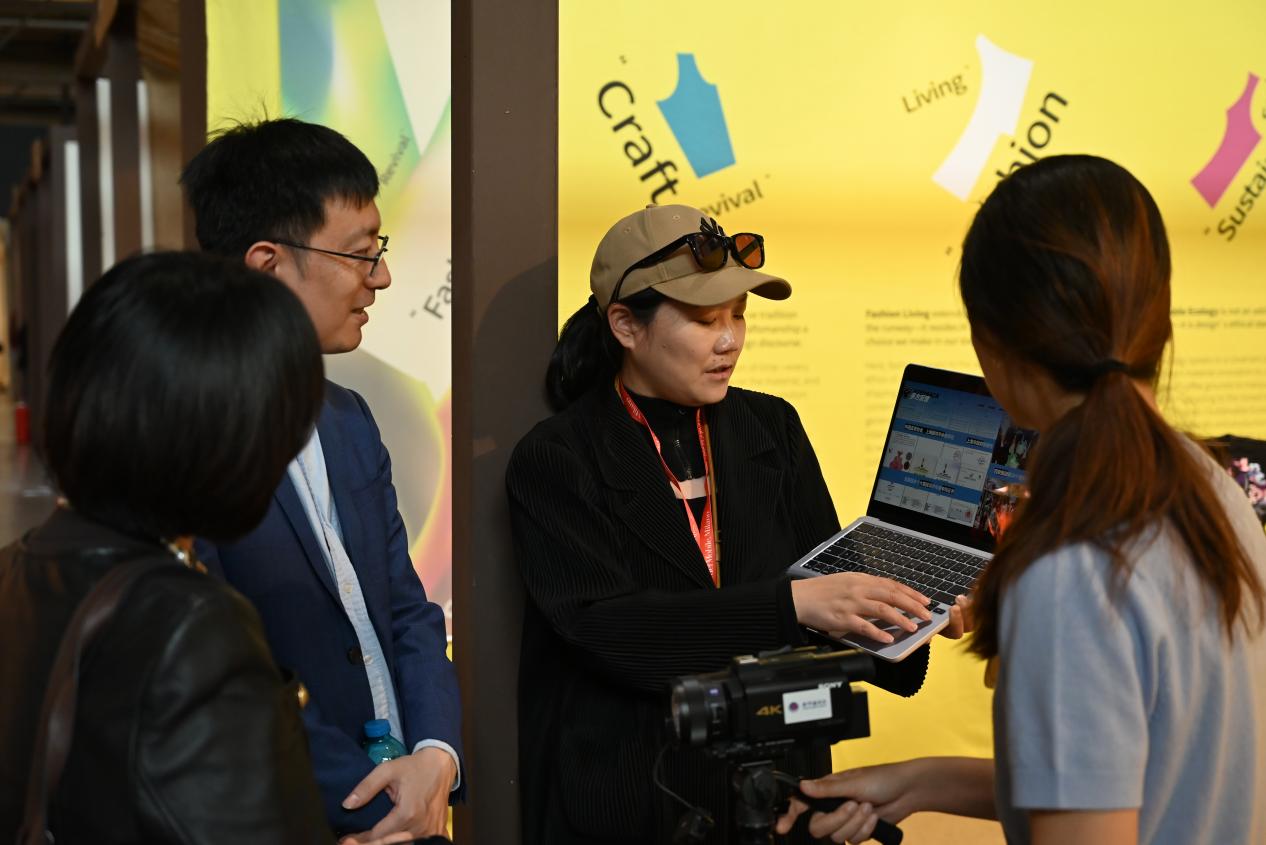
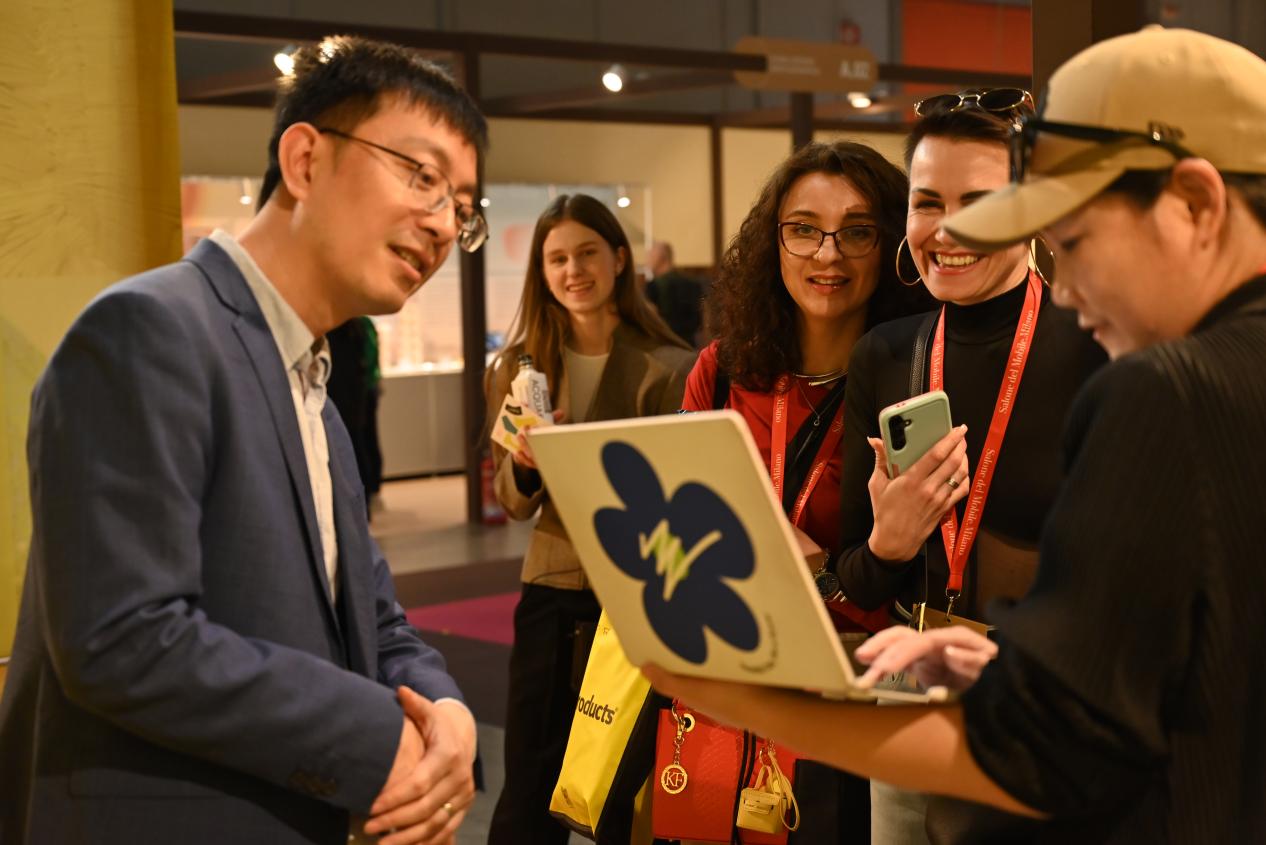
On the opening day of the exhibition, a professor from the University of Palermo named Federica lingered for a long time in front of the products featuring Shui ethnic script known as Shuishu. With astonishment, she repeatedly asked: “This is so beautiful. Are these letters or codes?” On the spot, Tian Yujing showed her photographs from field research, explaining the origins and symbolism of the thousand-year-old Shui script, and then demonstrated how laser engraving transforms ancient patterns into modern accessories.
After listening, the professor remarked with admiration: “I’ve seen many Eastern symbols before, but you are the first to explain the cultural story, craftsmanship, and modern design so clearly and vividly.” Before leaving, she specifically left her contact information, expressing hope for future collaboration in the digital preservation of intangible cultural heritage.
Unlike exhibitions that merely display cultural symbols, Donghua’s design philosophy is problem-driven and integrates art with engineering. The team translates research into tangible products and applies it to market realities. Tian Yujing explained that the team traveled to Guizhou, Yunnan and other regions to conduct field research, documenting the craft skills of more than a dozen intangible cultural heritage inheritors, extracting a wealth of traditional patterns and cultural genes, and using digital and sustainable design language to breathe new life into ancient intangible heritage in today‘s world.
The lightweight leather CMF research series tackles the industry-wide pain point of “excessive weight” in women’s handbags. By employing laser engraving and parameter optimization, the team reduced leather weight by nearly 36% while meeting national standards for tensile and bending tests. The resulting material features a translucent, lace-like texture that balances aesthetics, durability, and comfort. These innovations have been incorporated into conceptual products for brands such as HONGU and Coach, and have been showcased at the China International Import Expo.
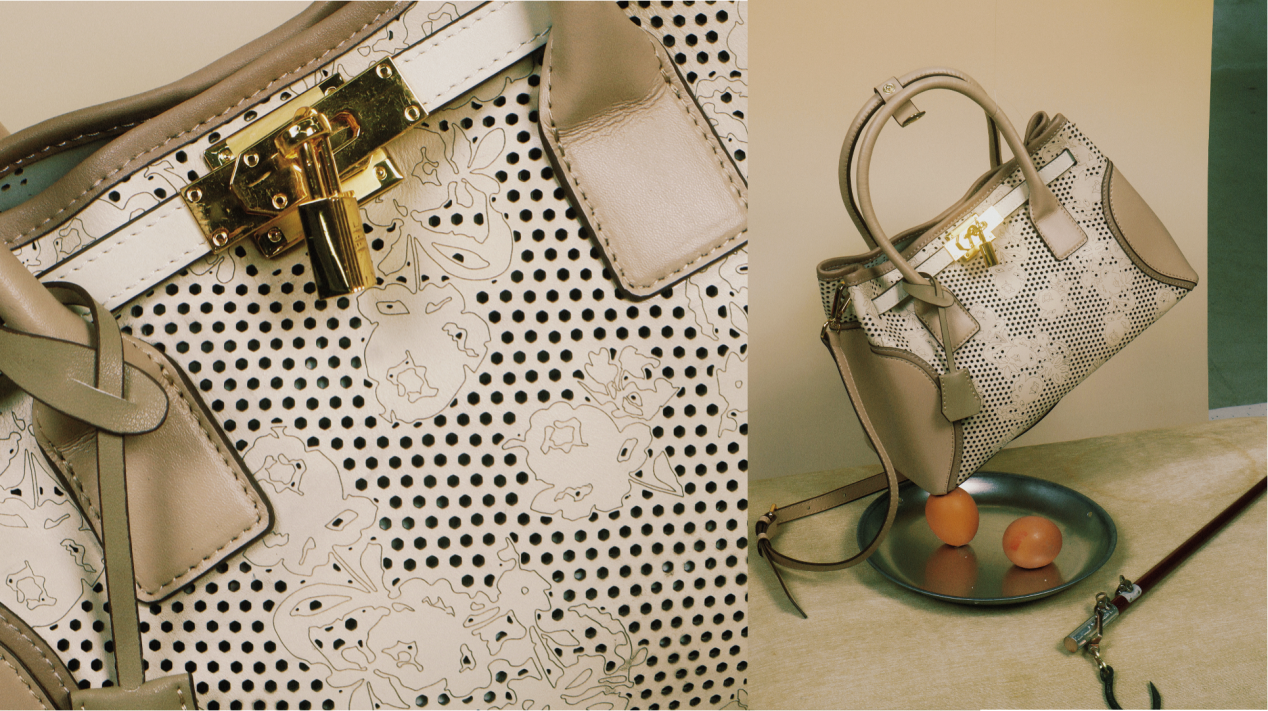
(The lightweight leather CMF series)
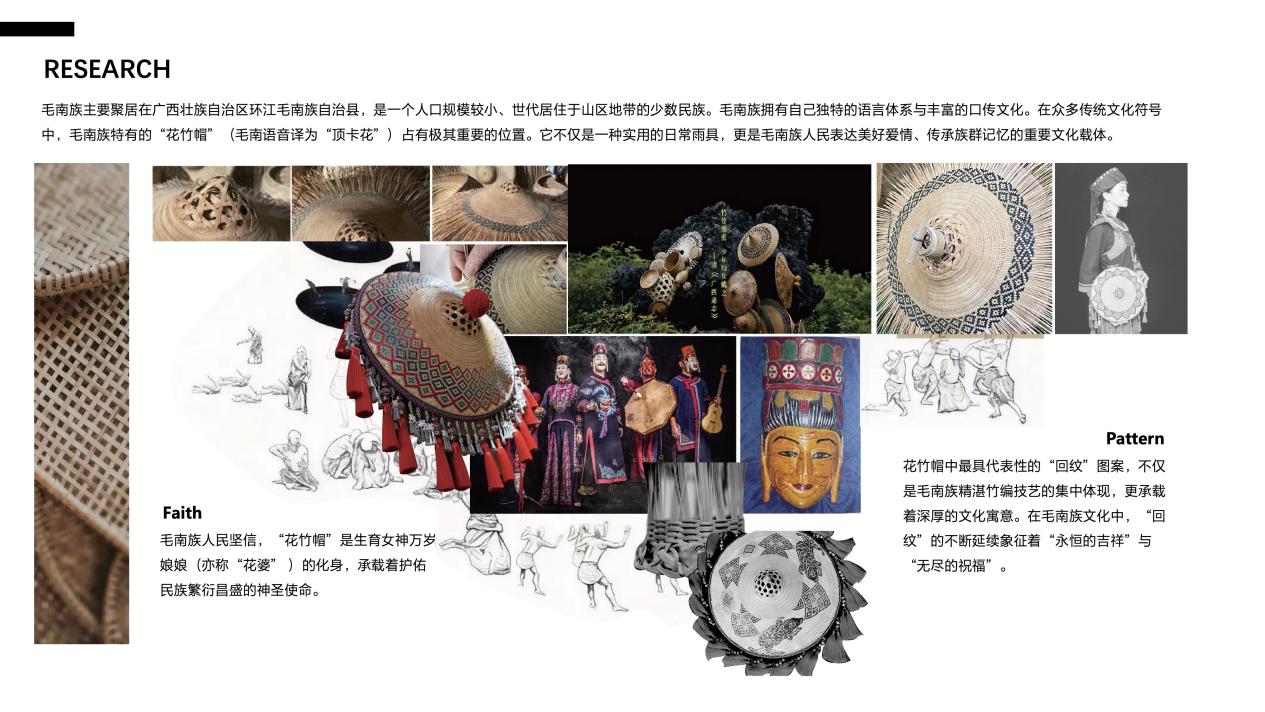
The fashion accessory series inspired by the traditional Hua Zhu Mao (flower-bamboo hat) of the Maonan ethnic group deconstructs three classic weaving textures. By creatively blending bamboo weaving, leather, and metal, the collection presents three distinctive styles—classic, natural, and futuristic—while preserving the structural integrity of the intangible cultural heritage and catering to contemporary wearing needs. The series has been exhibited in multiple locations around the world.
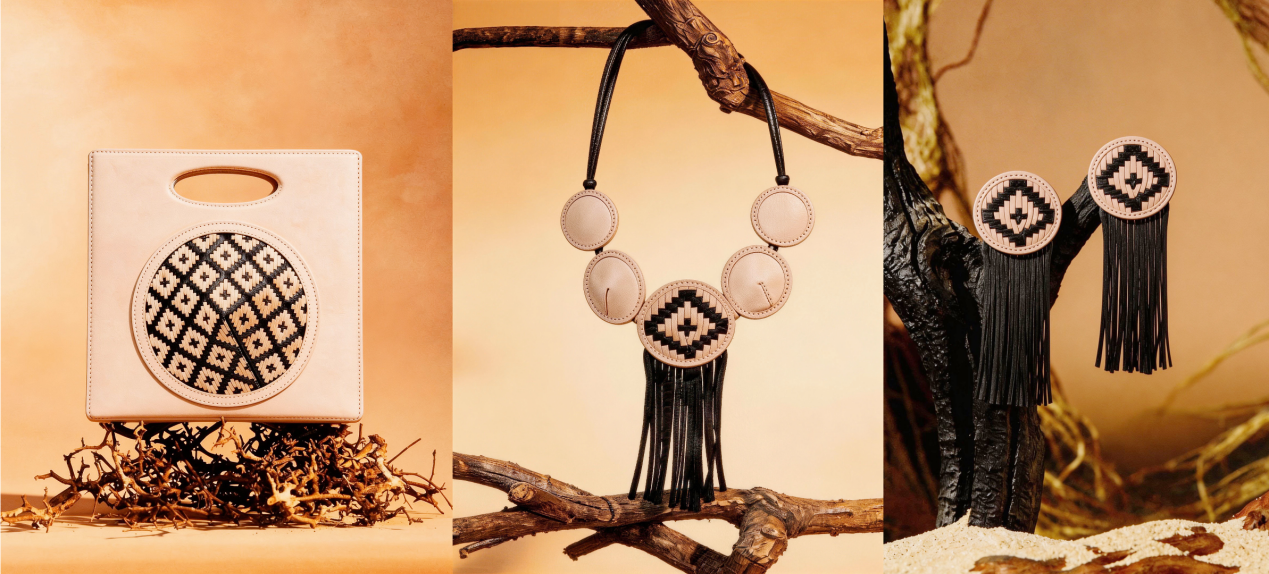
(Jewelry series inspired by the traditional Maonan Hua Zhu Mao)
From the shiny-finish leather shoes crafted from Dongethnic fabric, to modular creative textures inspired by traditional Chinese medicine, accessories made from recycled coffee grounds, and a sustainable algae-based biomaterial series—each piece embodies both the understated elegance of Eastern aesthetics and the functional logic of modern design.
East-West Mutual Learning: Appreciating One's Own Beauty, Engaging Global Design with Cultural Confidence
On the international stage of Milan Design Week, the differences and resonances between Chinese and Western design are strikingly clear and profound. Tian Yujing candidly observed that Western design emphasizes deep, focused refinement in specific areas, the pursuit of craftsmanship excellence, material innovation, and individual expression. In contrast, Chinese design is rooted in five thousand years of civilization, valuing artistic conception, emotional resonance, harmony with daily life, and excelling at taking culture as its soul while remaining problem-solving oriented. Eastern and Western design are not opposites but complementary and mutually reinforcing; it is not about imitation, but about each celebrating its own beauty and sharing that beauty with the other, achieving harmony together.
In a corner of the booth, a piece of time-honored Dong ethnic fabric drew the attention of many foreign visitors. An Italian lady carefully reached out to touch it, running her fingers repeatedly over its luster and texture, and asked with curiosity: “Is this silk or some special material?” A student explained the ancient craftsmanship behind the fabric through a video demonstration: repeatedly beating the cloth with egg white and rice milk, going through dozens of steps to achieve a water-repellent, smooth, and warm texture. After listening, the lady said with a smile: “So the beauty of the East is not painted. It is ‘beaten’ into being, and made with heart. I can feel the warmth in this fabric.”
This trip to Milan gave Tian Yujing a genuine sense that the international community’s perception of Chinese design is evolving. Gone are the days when impressions were limited to superficial symbols like “dragons, phoenixes, and blue-and-white porcelain.” Instead, there is now a deep recognition of Chinese design logic, research processes, and industrial value.
“The future competitiveness of a world-class city depends, to a large extent, on its design power,” said Sun Jie, Dean of the College of Fashion and Design at Donghua University. He emphasized that design disciplines in higher education must take on three missions: cultivating future design talents, serving as a birthplace of original ideas, and shaping urban civilization. With artificial intelligence, sustainable concepts, and new materials constantly redrawing the boundaries of design, universities must stand at the forefront of knowledge innovation to serve the high-quality development of cities and industries.
In Sun Jie’s view, for Shanghai design to enhance its global influence, three major upgrades are needed: first, upgrading from manufacturing strength to original innovation leadership, gaining a voice in setting trends; second, upgrading from product export to cultural export, establishing a narrative system for Chinese design; and third, upgrading from isolated breakthroughs to ecosystem leadership, building an innovation community that brings together education, industry, capital, exhibitions, and media.
Empowering the City: Donghua as a “Super Connector,” Elevating Shanghai to the World’s Design Heights
The confidence of cultural identity is rooted in the soil of the city; the vitality of design innovation is woven into the fabric of urban development. As a “City of Design” awarded by UNESCO, Shanghai is accelerating its journey to become a world-class design hub. Data shows that since being named in 2010, the city’s creative design industry has grown from 472.4 billion yuan to over 1.6 trillion yuan in 2025, maintaining double-digit average annual growth. Shanghai now hosts 21 national-level industrial design centers and 200 municipal-level design innovation centers, and the “Shanghai Design 100+” initiative has facilitated the transformation of achievements worth more than 250 billion yuan.
Located in this vibrant metropolis, Donghua University resonates in step with the city’s strategic vision and is building itself into a “super connector” for Shanghai’s design and fashion ecosystem: connecting education with industry to deepen the integration of production, learning and research; connecting design with the city to bring design into public spaces, community regeneration, and city branding; and connecting innovation with application to create a seamless chain from laboratory to market, making “Donghua Design” a true “Shanghai Brand.”
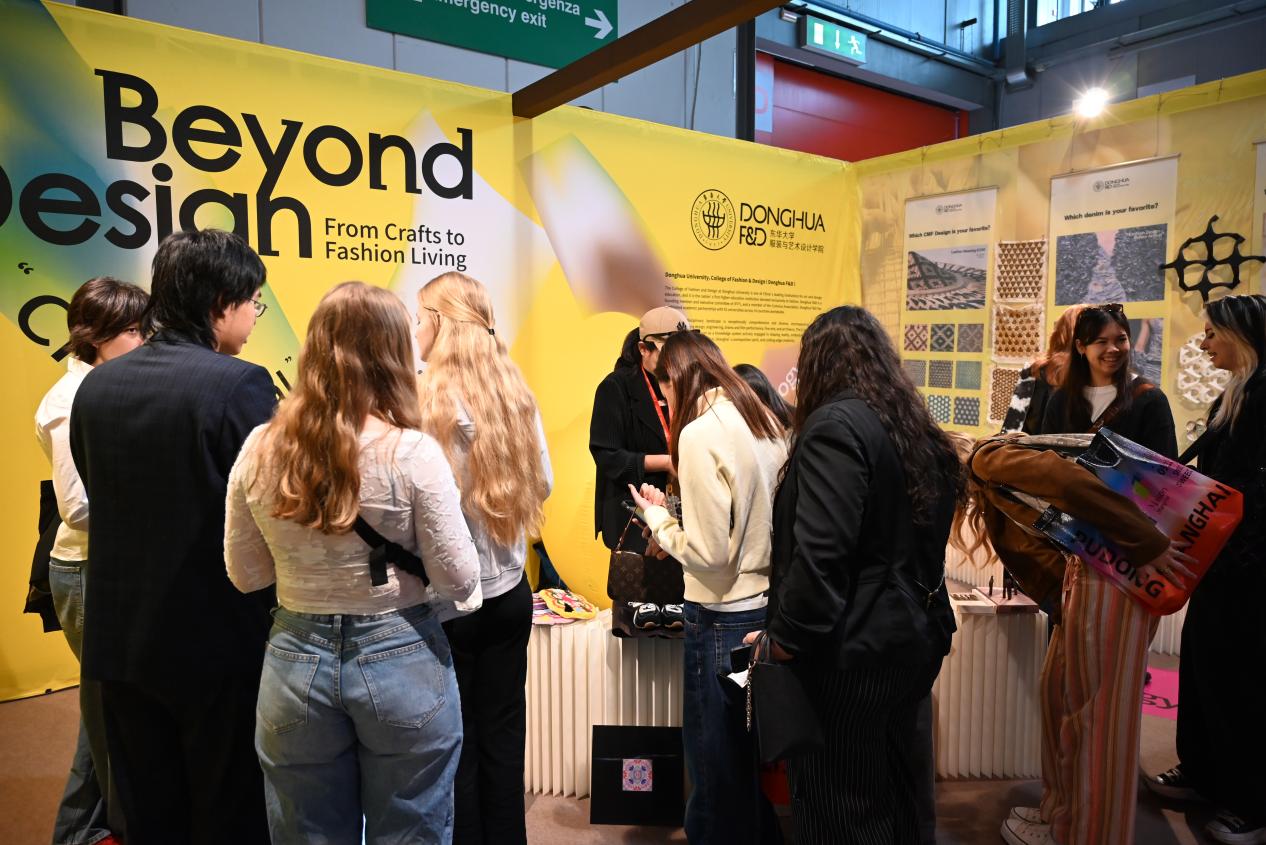
The outcomes from this Milan exhibition have already begun to feed back into teaching, research, and industrial collaboration. The team has reached agreements with several Italian design universities on joint workshops, and has established industry-university-research cooperation consensus with alumni enterprises in Shanghai in fields such as automotive interiors and fashion accessories. Multiple outcomes are planned for implementation in Shanghai.
From the campus on the shores of Shanghai to the streets of Milan, from millennia-old intangible cultural heritage to contemporary fashion lifestyles, Donghua faculty and students — using design as their brush and craftsmanship as their bridge — are integrating Eastern aesthetics into the global context.