Recently, Zhong Hongliang, a researcher at the Center for Advanced Low-Dimensional Materials, published a research paper titled "One-pot synthesis of quasi-block fluoropolymers for graded heterojunctions via dual resurfacing" in Nature Communications. The study reports a series of novel polyfluorinated polymer materials. By employing a "dual resurfacing" strategy driven synergistically by surface energy and fluorocarbon solvents, the team successfully achieved an ideal graded heterojunction structure in organic solar cells, attaining a device efficiency of 19.60%.
In organic solar cells, the donor/acceptor heterojunction structure is critical for exciton dissociation and charge transport. Although the conventional bulk heterojunction provides sufficient donor-acceptor interfaces, it is difficult to avoid charge recombination losses. The graded heterojunction combines the short exciton diffusion distance of the bulk heterojunction with the charge gradient advantage of the bilayer heterojunction, yet its solution processing has long faced challenges.
To address this challenge, the research team designed and synthesized a series of polyfluorinated polymers containing heptafluoroisopropoxy side chains. The study found that fluorinated monomers and conventional monomers exhibit significantly different reactivities, leading to the formation of quasi-block copolymers (qb-PF20) in a one pot polymerization. Their structure and properties are comparable to those of the two step synthesized block copolymers (b-PF20) and are significantly better than those of the random copolymers (ra-PF20). Due to the extremely low surface energy of the fluorinated blocks, these fluoropolymers undergo a "stratification" phenomenon during solution casting, in which the fluorinated blocks spontaneously migrate toward the film surface. When the active layer is fabricated by sequential deposition, a small-molecule acceptor solution is spin coated onto the fluoropolymer film. As the acceptor penetrates downward, the donor simultaneously moves upward spontaneously, thereby forming a vertical donor/acceptor gradient distribution.
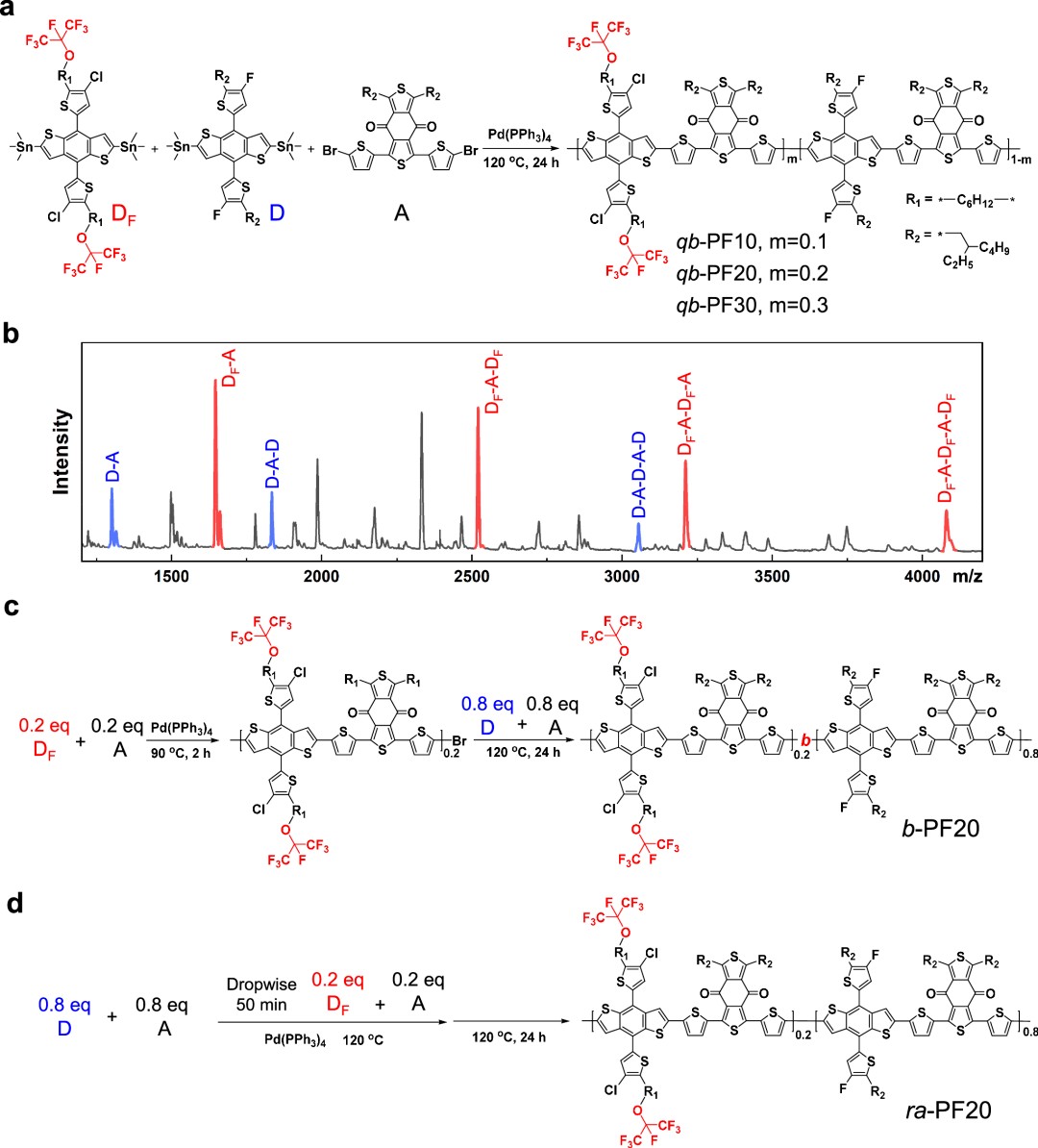
Figure 1 The quasi-block fluoropolymer (qb-PF20) synthesized via the one-pot method exhibits performance comparable to that of the block copolymer synthesized by the conventional two-step method.
To further optimize the gradient distribution, the team innovatively introduced a device engineering strategy termed "fluorocarbon solvent vapor annealing (FSVA)". Leveraging the unique solubility of polyfluorinated polymers in fluorocarbon solvents, the FSVA treatment induces the polyfluorinated polymers to migrate upward again, achieving dual resurfacing and a more uniform graded heterojunction. The optimized device based on qb-PF20 achieves a power conversion efficiency of 19.60% and exhibits excellent batch-to-batch reproducibility and universality.
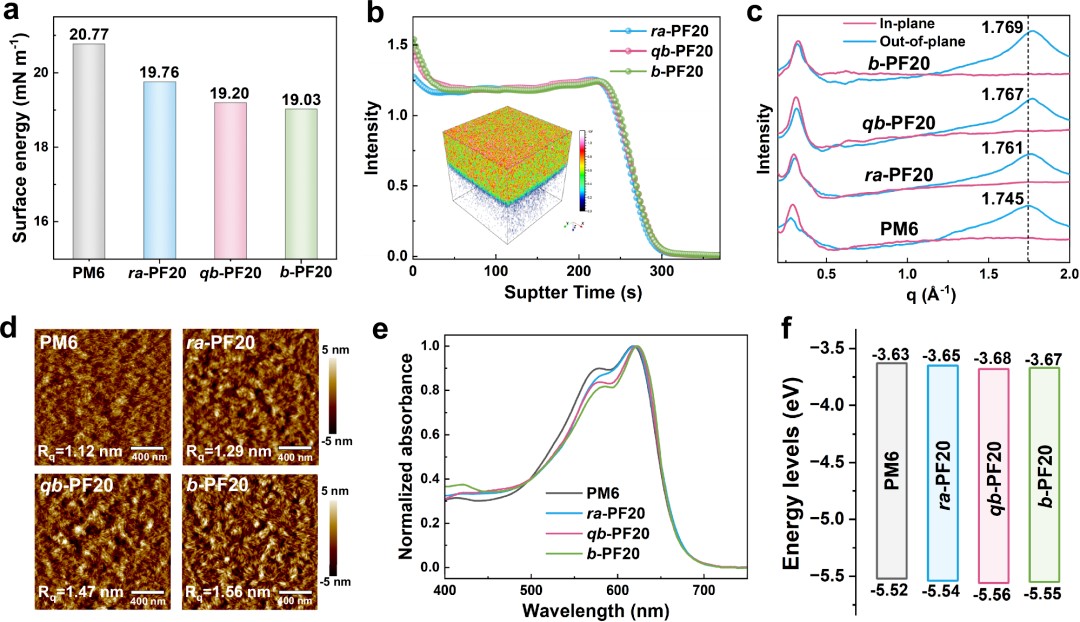
Figure 2 Sequential deposition combined with FSVA treatment achieves an optimal graded heterojunction via dual resurfacing.
Zhilong He and Siyuan Li, Ph.D. students in Professor Hongliang Zhong's group, are the co-first authors of this paper. Professor Hongliang Zhong is the sole corresponding author, and Donghua University is the primary affiliation of the correspondence. The research groups of Professor Zheng Tang at Donghua University, Professor Guanghao Lu at Xi'an Jiaotong University, Professor Changzhi Li and Professor Lijian Zuo at Zhejiang University also made significant contributions to this work. This work was supported by the National Natural Science Foundation of China, the Natural Science Foundation of Shanghai, the Oceanic Interdisciplinary Program of Shanghai Jiao Tong University, and the Start-up Research Fund of Donghua University.
Original link to this article:https://doi.org/10.1038/s41467-026-71721-4