Professor Yi Zhao’s group from the College of Textiles of Donghua University, has been conducting a series of studies on medium transport via polarity induction, dynamic covalent chemistry, and deposition anchoring at multi-dimensional textile interfaces under complex operational conditions, focusing on the enhancement of textile surface/interface performance and the development of green technologies. These efforts have established a low-carbon route for the green performance enhancement of high-functional textiles. Recently, in collaboration with Professor Nam-Joon Cho and Research Fellow Chenchen Zhou from Nanyang Technological University (NTU), Singapore, the group has made new advances in the green and nondestructive surface/interface functionalization of nonwoven materials. The related results were published in the international journal Advanced Functional Materials under the title “Micro/Nanoarchitectonics of Ethanol-Unfolded Keratin for Dual-Function Biodegradable Nonwovens” and were featured as a cover article. Ruiyan Ni, a Ph.D. student at the College of Textiles from Donghua University, and Qiong Deng, a master’s student, are the co-first authors. Donghua University is the primary corresponding affiliation.
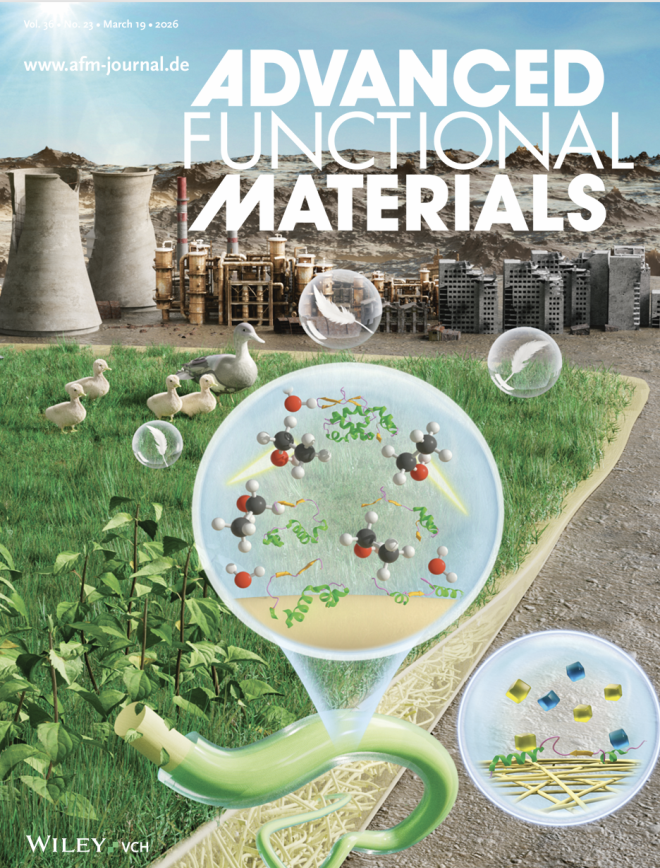
(the cover of Advanced Functional materials)
With the increasing demand for green manufacturing and material functionalization, how to achieve surface/interface functionalization of nonwoven materials without compromising the original structure and properties of the substrate has become a critical challenge in this field. Conventional functionalization methods often rely on complex pretreatments or involve the use of toxic chemicals, which tend to damage the pristine porous structure and intrinsic properties of the materials, making it difficult to balance greenness, stability, and universality. To address this issue, based on the amphiphilic conformational transition of proteins, this study proposes a novel green and nondestructive surface/interface functionalization strategy via polarity-induced keratin self-assembly.
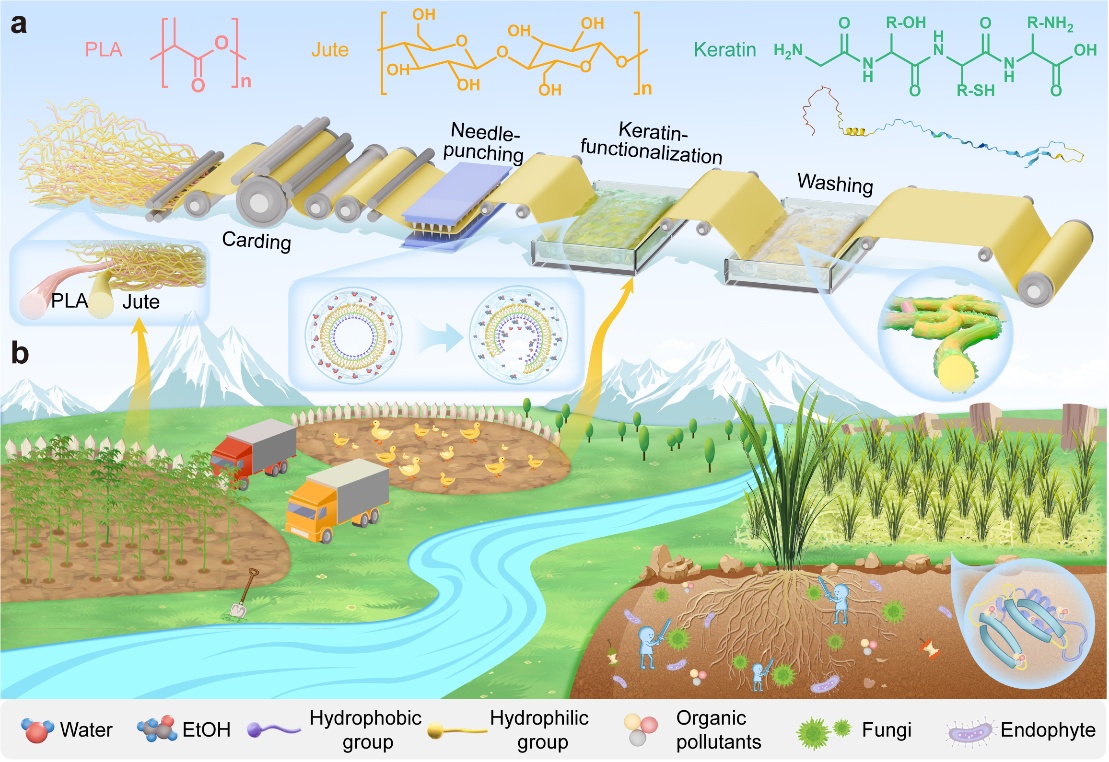
(Preparation and Application of Keratin-Functionalized Jute/Polylactic Acid Nonwoven Materials)
This strategy employs ethanol to induce the unfolding and deconstruction of keratin molecular chains, and subsequently promotes their stable reconfiguration on the fiber surfaces of nonwoven substrates. In this way, a uniform and stable protein functional layer is constructed without pore blocking or sacrificing the pristine properties of the material.
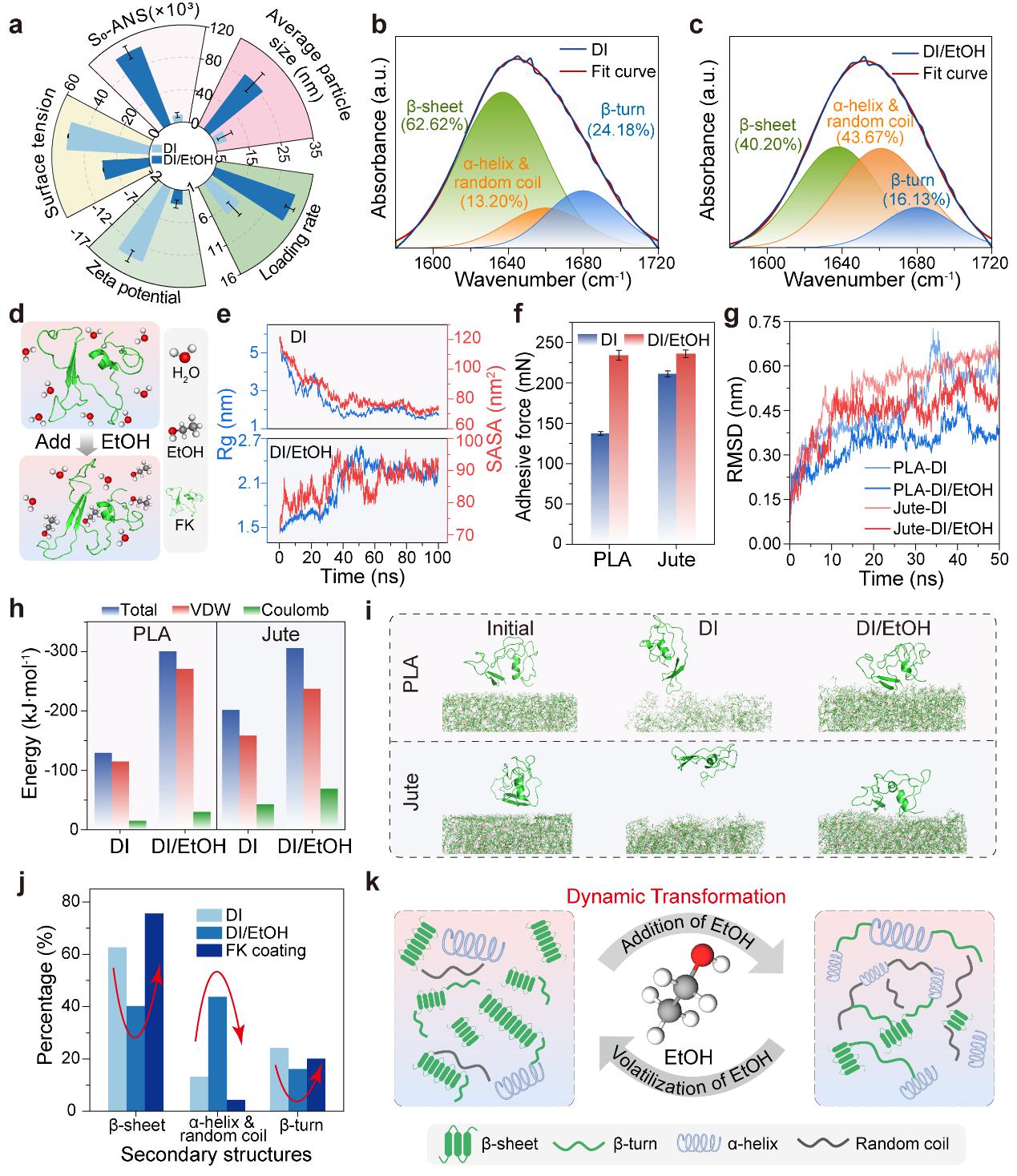
(Mechanism Analysis of Ethanol-Induced Keratin Unfolding and Its Adsorption Process on PLA and Jute Surfaces)
The keratin-functionalized jute/polylactic acid nonwoven materials fabricated via this strategy exhibit significantly improved wettability (water contact angle reduced from 121° to 0°), liquid holding capacity (3.2 times higher than that of the pristine substrate), and mechanical properties. Meanwhile, they possess both organic pollutant adsorption and plant cultivation capabilities, demonstrating application potential in areas such as soilless cultivation, brownfield remediation, and environmental remediation.
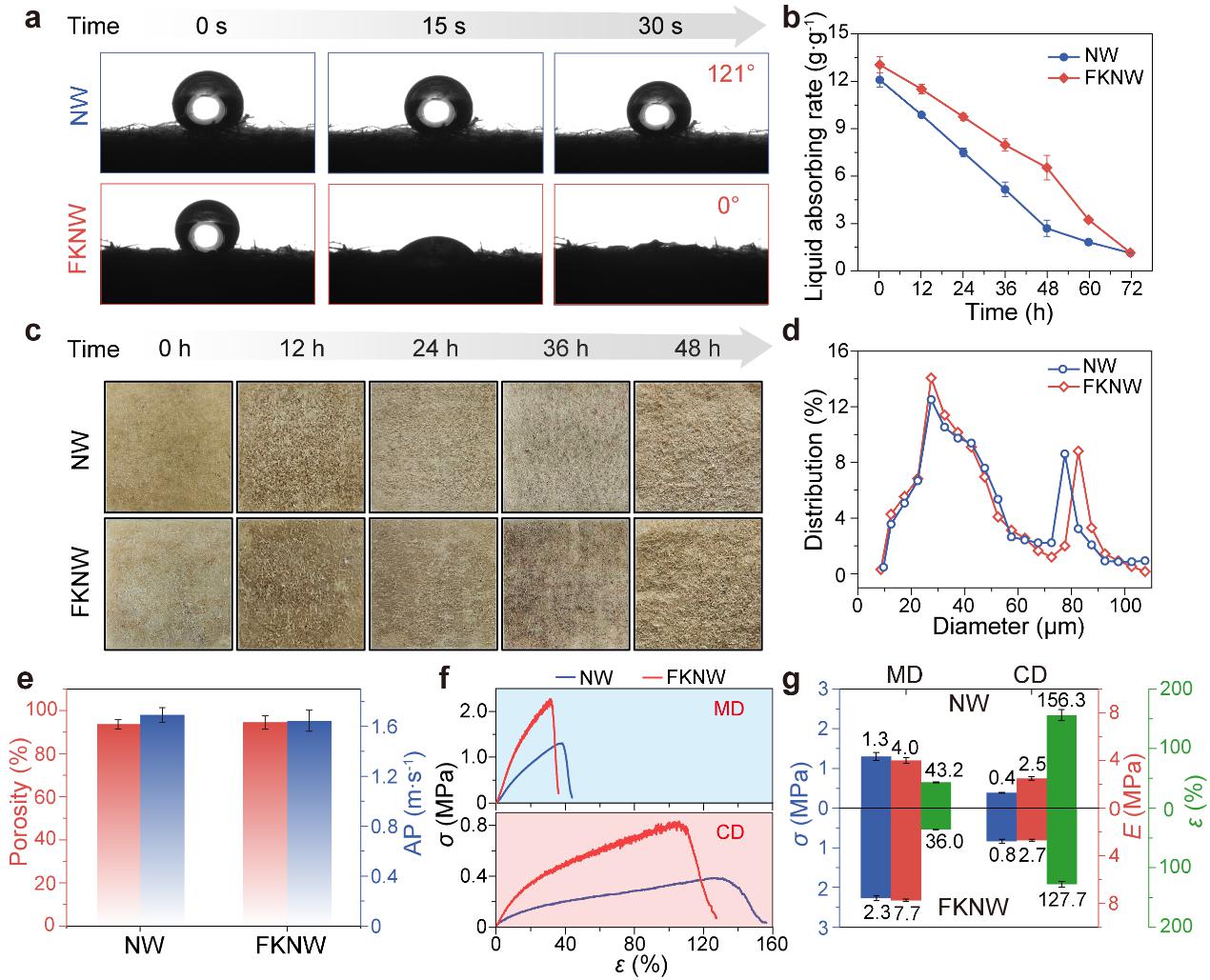
(wettability, water retention, and mechanical properties of keratin-functionalized jute/polylactic acid nonwoven materials)
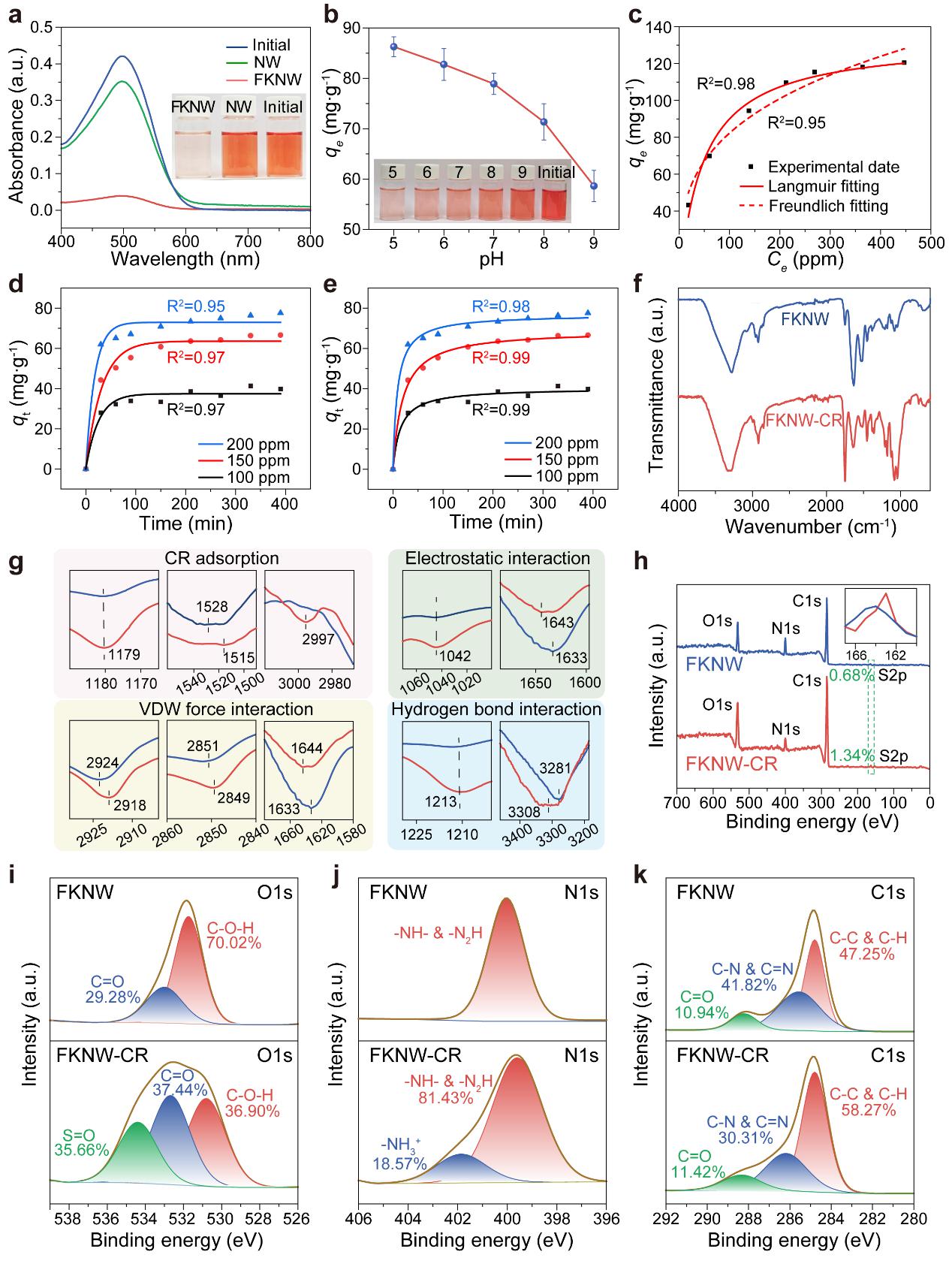
(Dye Adsorption Performance of Keratin-Functionalized Jute/Polylactic Acid Nonwoven Materials)
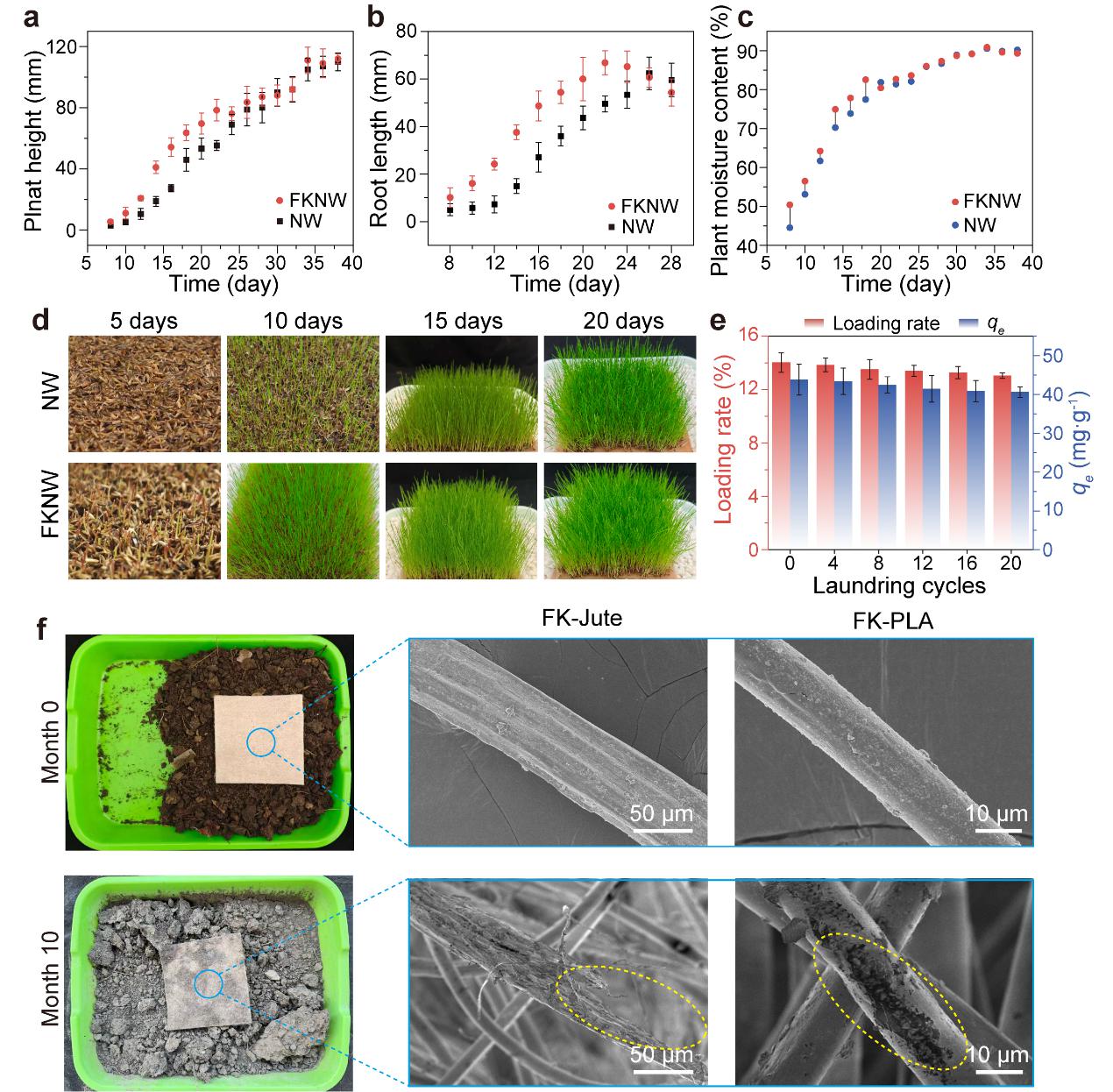
(Cultivation Performance and Biodegradability of Keratin-Functionalized Jute/Polylactic Acid Nonwoven Materials)
The above study was supported by the General Program and Young Scientists Fund of the National Natural Science Foundation of China, the Shanghai Oriental Talents (Youth) Program, and the Shanghai Sailing Program. The research team will continue to advance the integration of surface/interface performance enhancement for functional nonwoven materials, promote scalable manufacturing, and strive to achieve breakthroughs in the industrialization of high-functional nonwoven forming.
Original link to this article: https://doi.org/10.1002/adfm.202530114