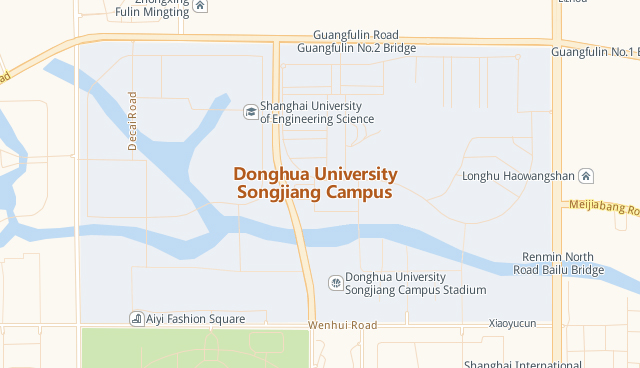
Liu Chenggong, Secretary of the Party Committee of Donghua University, and Xiang Yanxun, President of Donghua University; Ge Dongbo, Deputy Director of the Shanghai Municipal Commission of Economy and Informatization Technology; Cao Jing, Deputy Secretary of the Party Committee of Tongji University; Wang Zhidong, Deputy Secretary of the Party Committee of Donghua University; and Yan Linping, Vice President of Donghua University, attended the relevant activities of the conference.
Xiang Yanxun attended the opening ceremony of the conference on the 25th and presented awards to U35 young design talents. The Creative Design Industry Project ‘Royal College of Art Shanghai Center’, jointly initiated by Donghua University and the Royal College of Art, was launched at the event.
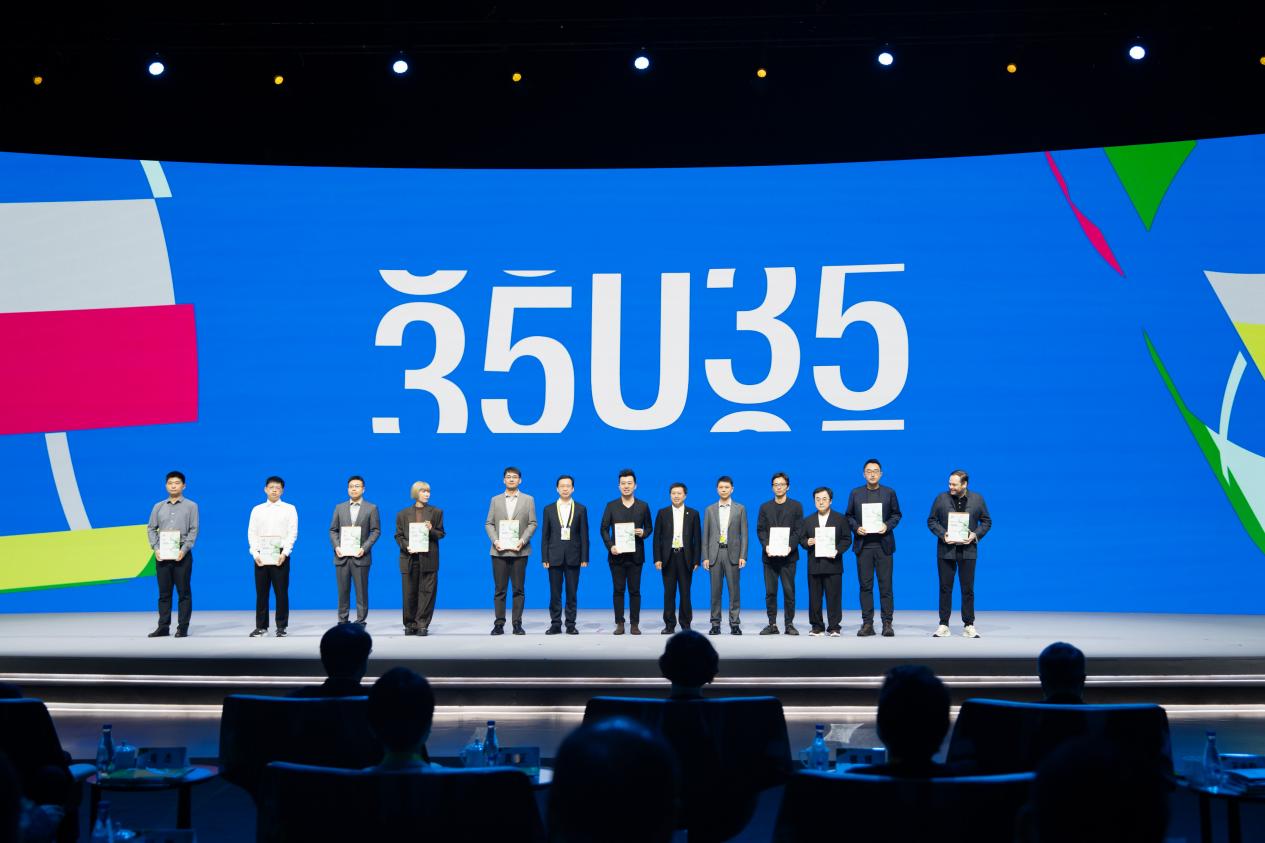
(Xiang Yanxun presents awards to U35 young design talents)
Igniting Minds, Co-creating a Design-powered Future
“Design is not an isolated act of creativity, but a systematic solution that integrates ecology, production, and way of life!” This statement set the tone on the afternoon of September 27th at the "Tech & Fashion" Think Tank Forum, titled ‘Eternal Vitality: Design-Driven New Horizons for Ecology, Production, and Life’. The venue was packed as a grand exchange of ideas spanning academia, industry, and policy-making commenced, placing the topic of "ecological design" squarely in the spotlight.
In his opening address, Liu Chenggong highlighted the World Design Cities Conference as a pivotal platform for Shanghai to pool global creativity, expressing his honor that Donghua University could co-host and deeply engage in this forum. He stated that the forum's theme, ‘Eternal Vitality: Design-Driven New Horizons for Ecology, Production, and Life’, aims to transcend the conventional boundaries of fashion and explore its humanistic spirit, cultural logic, and technological momentum. He elaborated on Donghua University's long-term commitment to merging fashion with technology, art with industry, and tradition with the future. The university positions ‘design-driven’ innovation as its core engine, believing it to be not merely an expression of aesthetics but a crucial means for problem-solving, value re-engineering, and shaping what's to come. He mentioned that this forum will build a platform for cross-disciplinary exchange. With a solid foundation and abundant achievements in smart textiles and green materials, Donghua University will leverage its disciplinary strengths and talent resources to deepen international collaboration, cultivate outstanding design professionals, and contribute to building a better world and a brighter future.
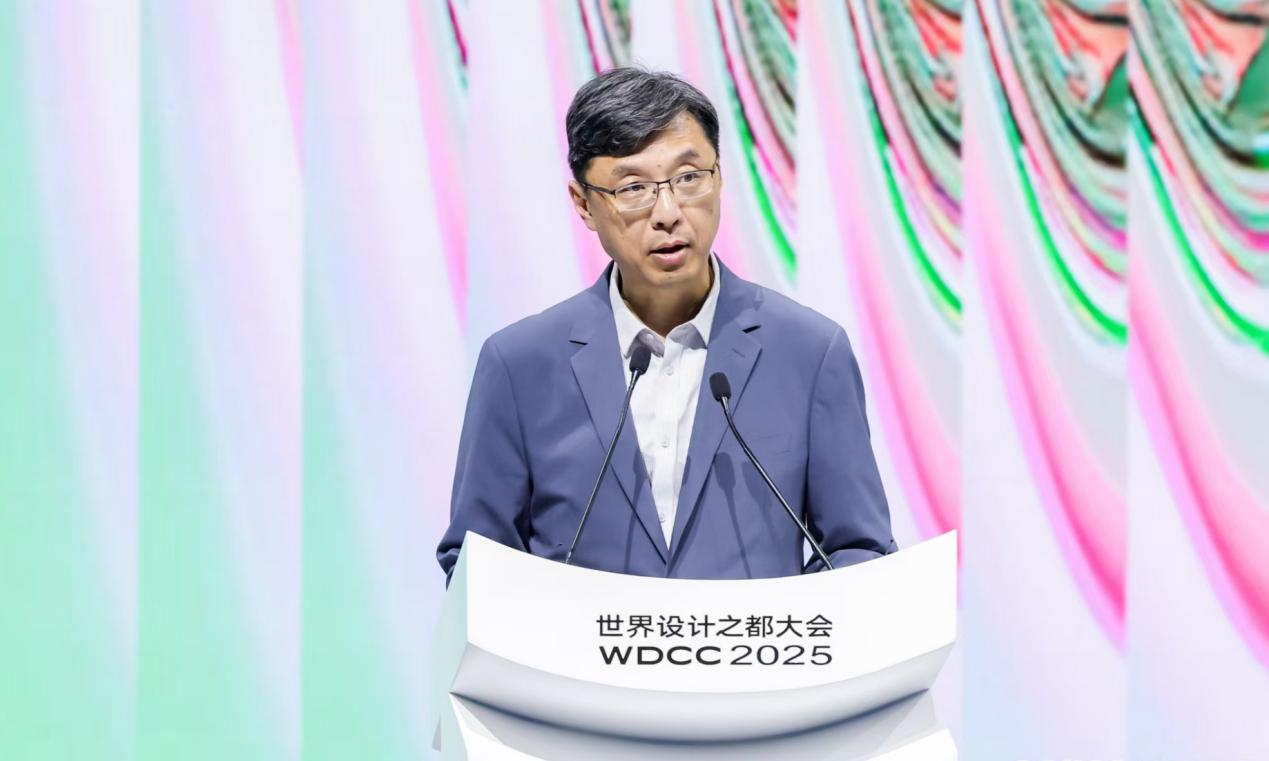
(Liu Chenggong was delivering a speech at the forum)
In his address at the forum, Ge Dongbo highlighted Shanghai's established foundation in sustainable design as a ‘City of Design.’ He noted the robust growth of its creative design industry, citing benchmark cases such as Xintonglian's sustainable packaging and SAIC Motor's green vehicle design. The ongoing push for carbon-neutral initiatives, he added, is providing significant momentum for China's dual carbon goals.
Looking ahead, Mr. Ge unveiled a three-pronged strategy for Shanghai:
To refine the ‘R&D + Design + Service’ industrial chain by fostering industry-academia-research-application integration and cultivating skilled design talent.
To promote green, intelligent manufacturing across the entire industrial chain, encouraging the use of sustainable raw materials and innovative applications to reduce carbon emissions throughout the product lifecycle.
To create new online-to-offline (O2O) fashion consumption experiences, leveraging AI and big data to enhance both design and user engagement.
He concluded by stating that the forum itself is a vivid practice of design-driven development and expressed his hope that all participants would contribute ideas to propel ‘Shanghai Design’ onto the global stage, serving worldwide needs.
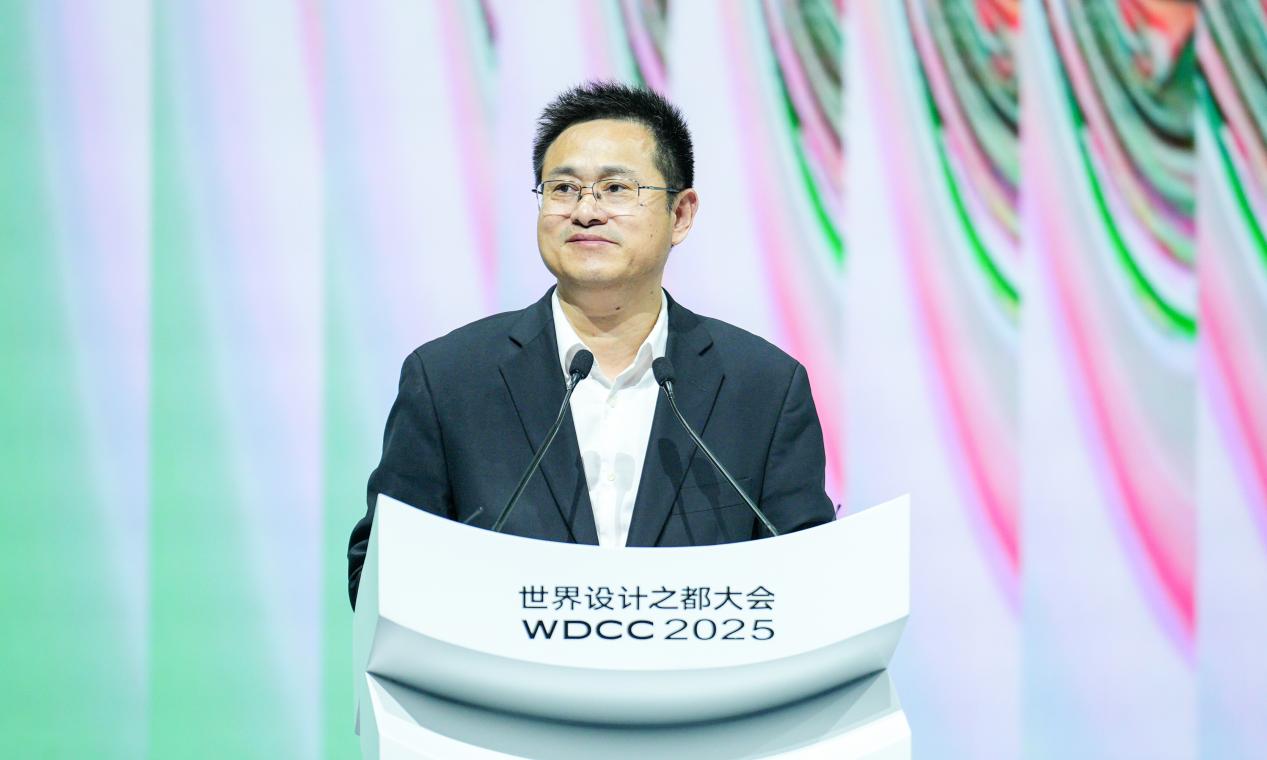
(Ge Dongbo was delivering a speech at the forum)
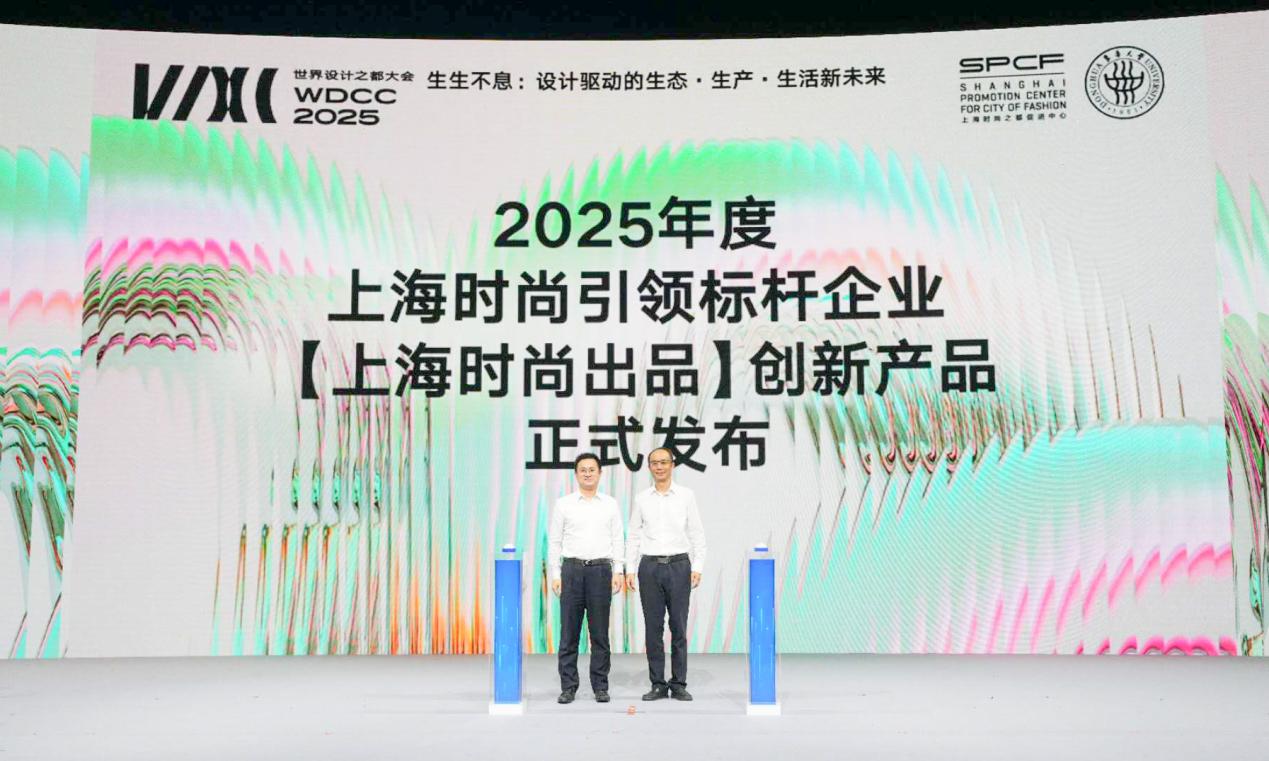
The event also unveiled the 2025 Shanghai Fashion Leadership Benchmark Enterprises and the ‘Shanghai Fashion Collection’ innovative product series.
“When we discuss positive environmental impact, we are not merely advocating for ‘reducing harm’ but emphasizing ‘increasing benefits’ ”, stated Wang Qian, Shanghai Regional Project Director of WWF Beijing Representative Office, in her keynote speech, “Treating design as a systemic endeavor—from material sourcing and supply chain transparency to product lifecycle and recycling—we embed collective action at every stage: brands, factories, consumers, and policymakers collaborating synergistically. Every choice reshapes the ecological balance sheet, propelling the fashion industry from resource extractor to ecological restorer."
"The supreme victory is won not through contention, but by retaining complex challenges within the enterprise and delivering pure value to the users," shared Sun Jianhua, Chairman of Nantong Fumei Fashion, "Design is not the mere accumulation of elements. It hinges on a streamlined supply chain, enduring craftsmanship, and authentic experiences to solve tangible problems. When a product's inherent value is self-evident, marketing can fall into a respectful silence. When details prove their worth over time, public praise naturally becomes the most robust conduit for growth."
Professor Zhang Yina of Fudan University, offering a think tank's analysis, indicated that the next wave of growth will pivot toward a ‘Sensible yet Resonant’ paradigm: leveraging data to discern structural opportunities and employing emotional narratives to connect with evolving lifestyles.
"The strategy for amplifying fashion consumption is to catalyze engagement within specific consumer cohorts by harnessing micro-trends like green fashion, 'Guochao,' and scientific fabric innovations. The provision of accessible aesthetics and complementary services is crucial to convert single transactions into durable consumer relationships."
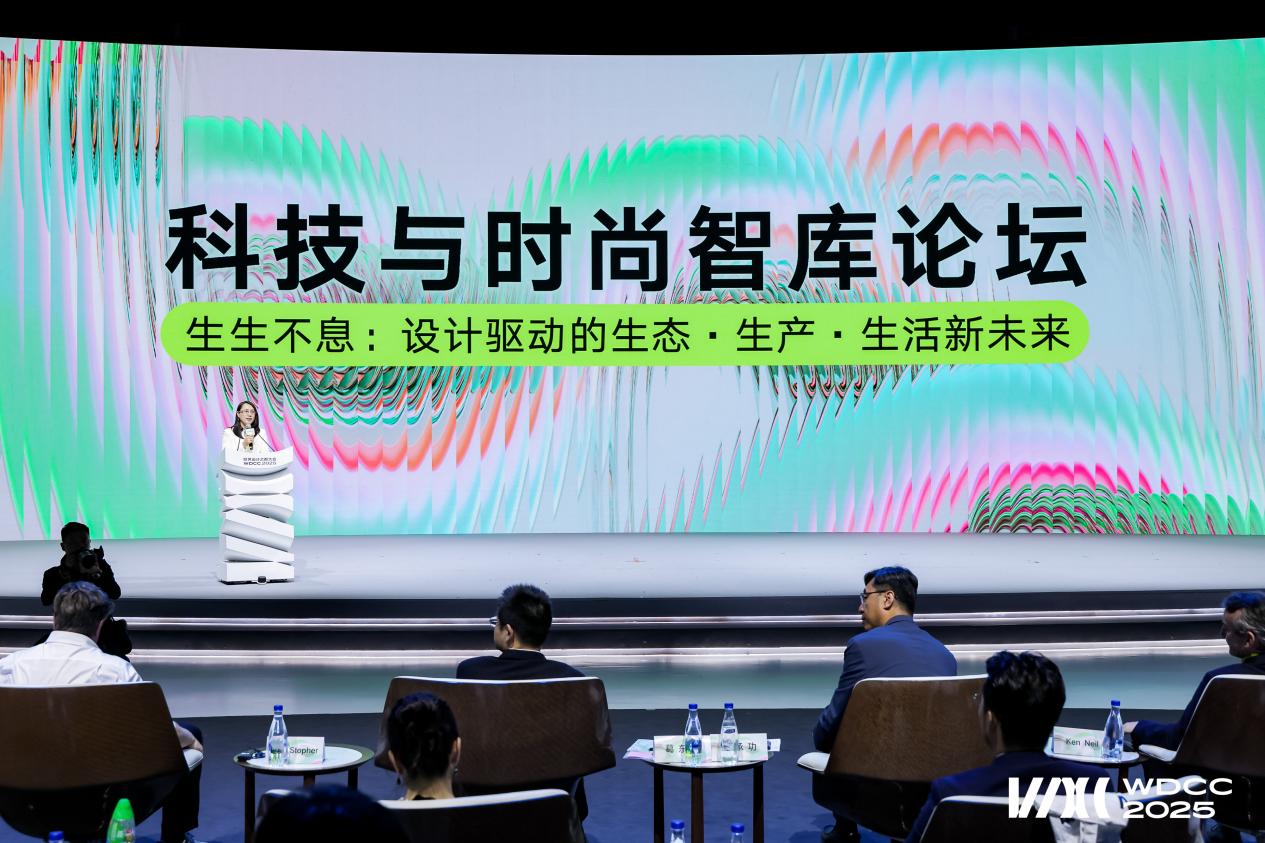
(Forum Venue)
During the panel forum, distinguished guests from China and abroad converged to explore the theme of ‘AI and the Multiple Futures of Sustainable Fashion.’ The panel featured Prof. Ken Neil, Deputy Vice-Chancellor of the Royal College of Art, UK; Prof. Ben Stopher, Deputy Vice-Chancellor of Norwich University of the Arts, UK; Prof. Joseph Press, an internationally renowned sustainable design expert; Prof. Qiu Xinxian, Dean of the College of Future Design at Harbin Institute of Technology(Shenzhen); Mr. Yang Liwei, HR Director of Fashion Brands at Richemont Group; Prof. Yang Qingqing from Shanghai Theatre Academy; and Prof. Sun Jie, Dean of the College of Fashion and Design at Donghua University. The discussion revolved around three core topics: ‘Sustainable Fashion,’ ‘Design-Driven Innovation,’ and ‘Intelligent Technology,’ directly tackling the latest global challenges and synergies between technological ethics, cultural heritage, and industrial application. The exchange provided highly inspiring and practical solutions for both academia and the fashion industry.
In parallel, the 4th Hanfu Creativity and Copyright Forum delved into the historical, artistic, and cultural values of traditional Chinese attire. It aimed to vitalize the innovation of outstanding traditional Chinese culture and foster a healthy industrial ecosystem through robust copyright protection. Meanwhile, the ‘Eternal Vitality: Endless Renewal’ Sustainable Fashion Forum centered on the theme of sustainability, focusing on green consumption, green materials, and the circular economy. Together, these two satellite forums highlighted Donghua University's multi-dimensional strategy and unwavering commitment to serving the city's cultural inheritance and ecological advancement.
Infusing fashion and design with technology, integrating 'hyper-future' concepts into tomorrow's living
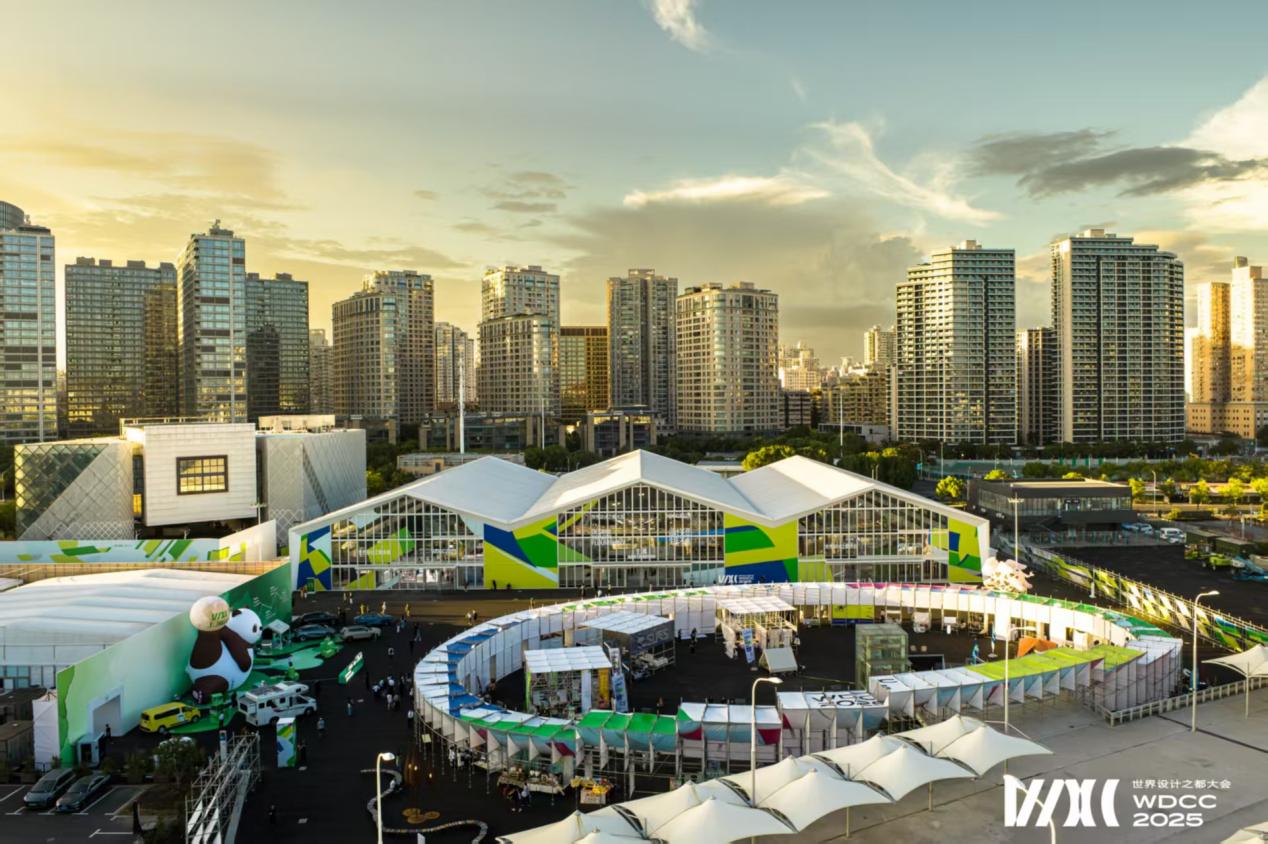
At the World Design Cities Conference 2025 (WDCC 2025), Donghua University's exhibition zone, "Hyper-Fashion: The Multiple Futures of AI and Sustainable Fashion," emerged as a major crowd-puller. The zone showcased nearly 30 cross-disciplinary innovations that blended technology with fashion, including fiber made from lunar soil, PFAS-free Anta membranes, and luminous car interiors. Visitors were left in awe, marveling at how fashion and design could be so groundbreaking.
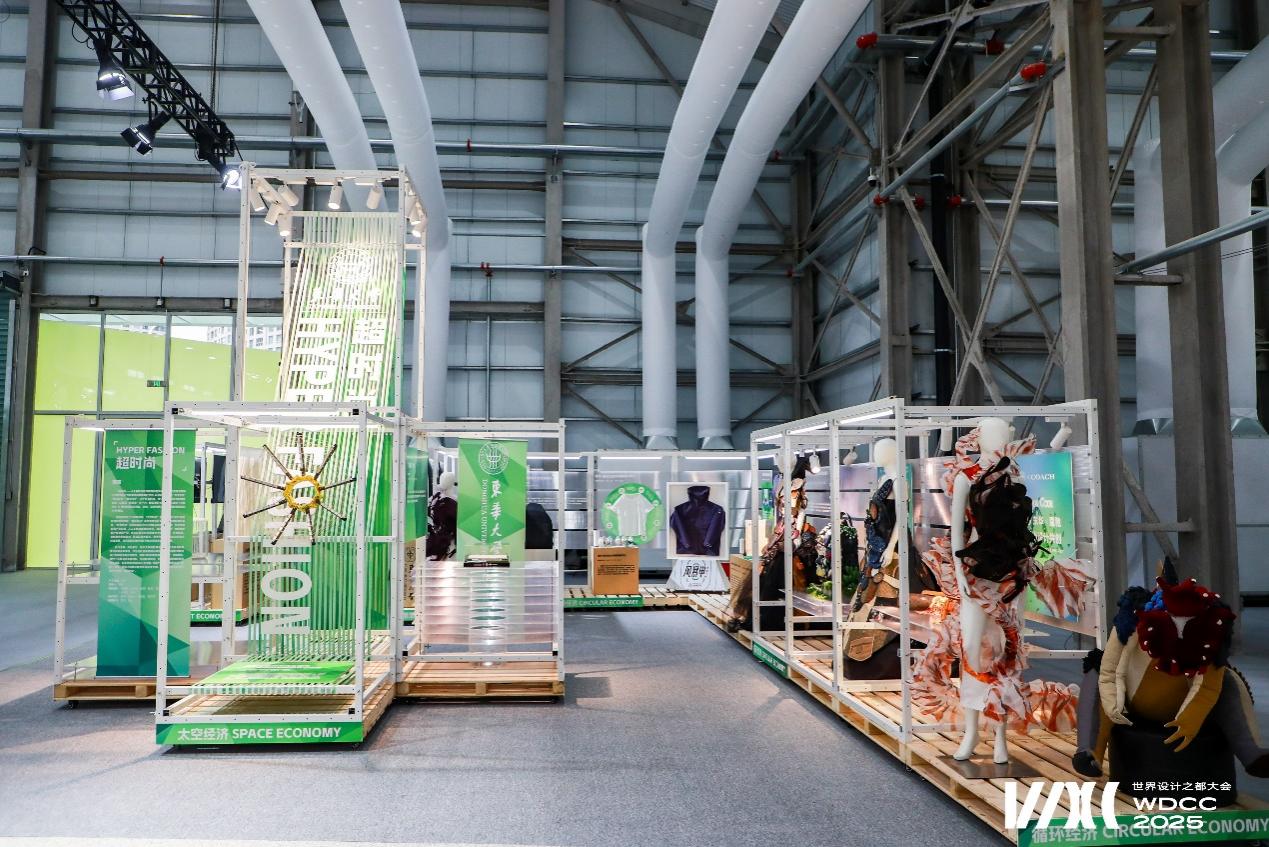
In the exhibition area, the ‘lunar soil fiber’ technology exhibit drew numerous curious glances. The research team successfully transformed lunar soil into fibers, a technology that can serve as the ‘structural framework’ for lunar research stations and be used to create flexible modules, weaving the ‘space dream’ into reality. Nearby, the metal mesh model of the Chang'e-4 Queqiao antenna showcased its prowess. This technology, which has propelled China to the forefront globally, has already made significant contributions to the Beidou and Tiantong satellite systems.
Green and low-carbon achievements were equally remarkable. The ‘garment-to-garment’ full-lifecycle recycling technology breathes new life into used clothing. The world's first 30,000-ton continuous melt-efficient depolymerization and regeneration production line for waste polyester textiles has successfully tackled the challenge of textile waste.
A jacket featuring the ‘fluorine-free Anta membrane’ also drew attention. This high-performance material, independently developed in China, breaks through the limitations of traditional waterproof and breathable technologies, marking China's first self-developed, mass-produced PFAS-free waterproof and breathable project. Furthermore, the bag co-created by Donghua and Coach showcases ingenious design, utilizing discarded materials to piece together a Song brocade pattern, infusing circular fashion with Eastern aesthetics.
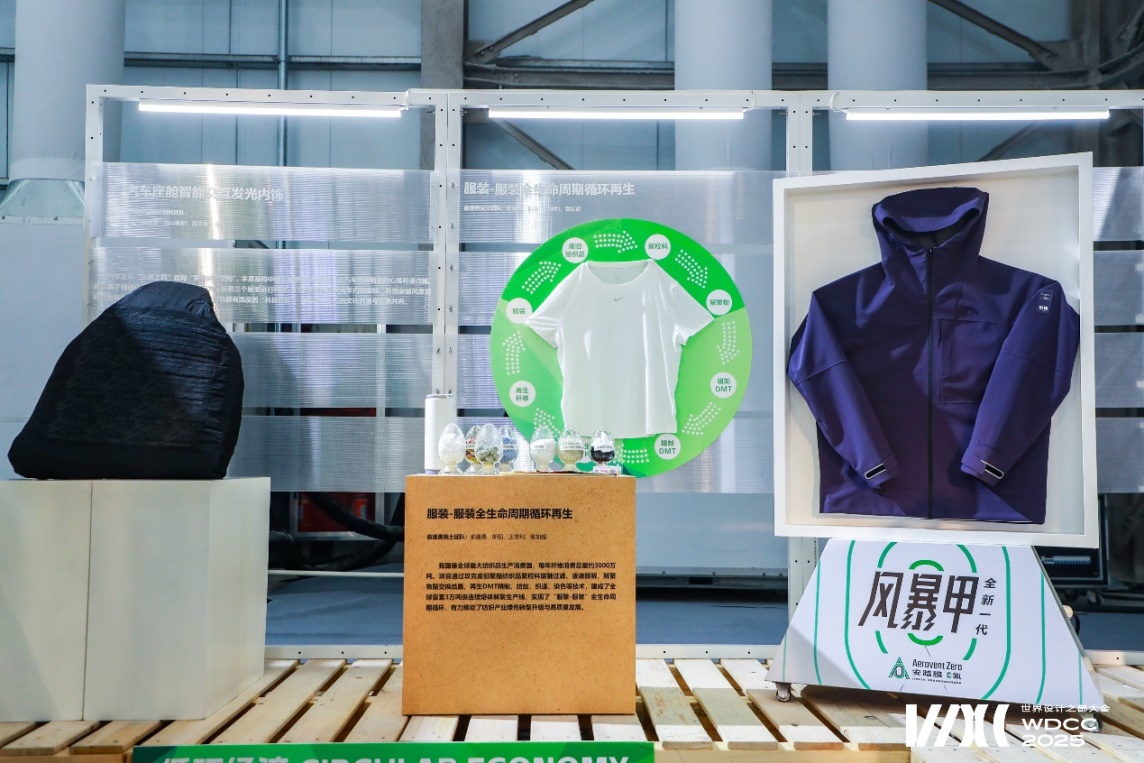
As a key partner and co-organizer of the Shanghai World Design Cities Conference, Donghua University's exhibition showcased not only cutting-edge explorations in technology and fashion but, more importantly, its commitment to human-centric design. The exhibits brought this philosophy to life: a car cabin interior that recites classic poetry with visuals upon touch; fabrics for autistic children that light up and play music when animal paw prints are pressed; and a VR olfactory game where seniors can ‘smell’ blooming flowers with a wave of their hand, exercising their cognitive abilities through play. Furthermore, Shanghai's second-generation integrated poles and the national standard for urban furniture—both developed by Donghua—exemplify thoughtful design for a ‘People's City,’ making streets tidier and travel more convenient for the elderly and people with disabilities.
As a true ‘partner’ in Shanghai's design ecosystem, Donghua leverages its proven prowess in ‘Design + Tech’ and ‘Fashion + Tech’ to translate tangible national priorities, from aerospace to low-carbon goals, into innovations that enhance everyday life for citizens. This exhibition was more than a display of outcomes. It was a powerful embodiment of Donghua's ethos: excellence in service and strong contribution to society.
Guided by culture, powered by technology, navigating the journey of Shanghai's fashion and design from past to future.
As the lights dimmed in the main venue, a digital vista titled ‘Celestial Canopy’ unfolded on the giant screen—where the silhouette of the Magnolia flower intertwined with interstellar light, and carbon-based elements seamlessly morphed into their silicon-based counterparts. This prelude set the stage for ‘Oriental Fashion: A New Mirror and The Boundary,’ a hyper-fashion spectacle that infused the congress with a profound soul of culture and the dynamic force of technology.
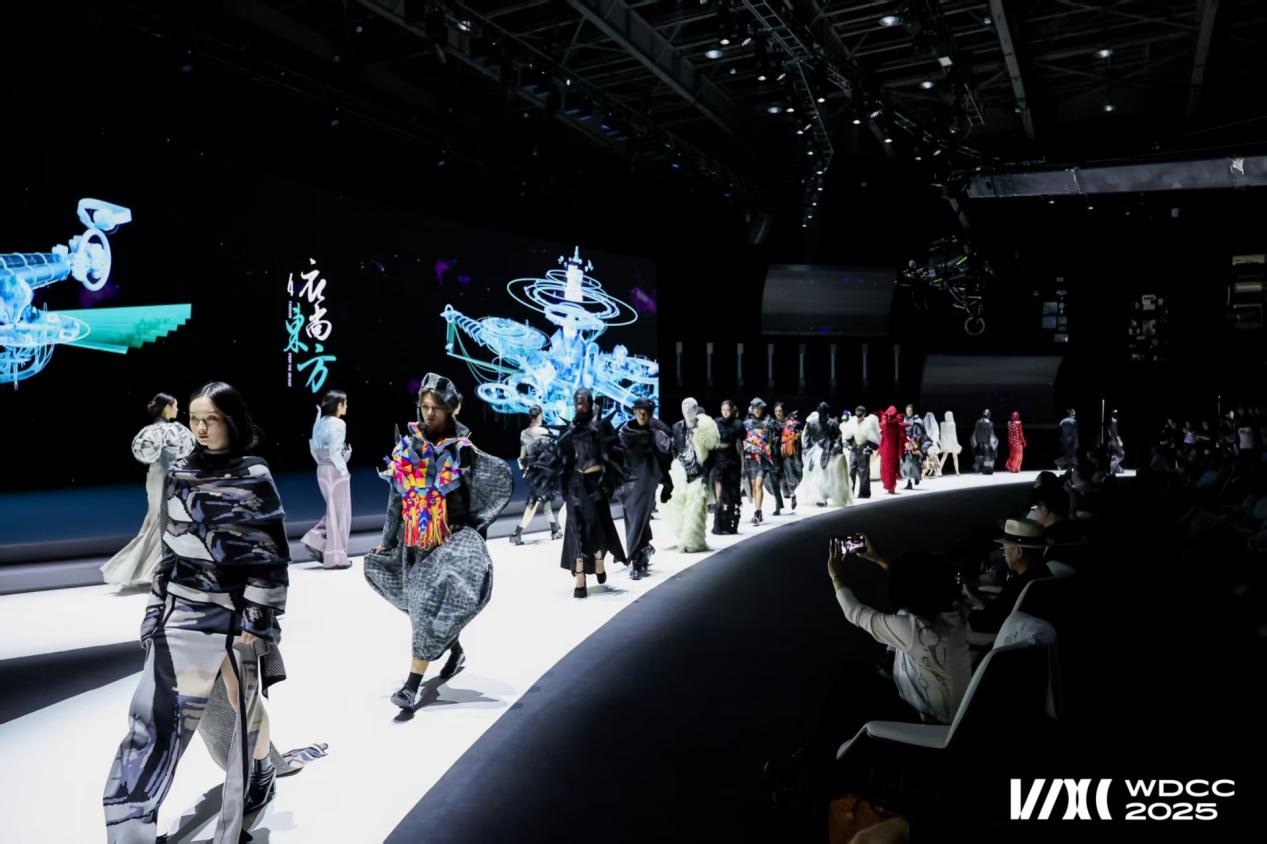
The performance unfolded in three acts: ‘Reflection and Projection,’ ‘Dream and Domain,’ and ‘Light and Radiance.’ All 60 ensembles, crafted by Donghua University's emerging designers and outstanding graduates, stood as perfect fusions of culture and technology. In ‘Reflection and Projection,’ designers meticulously constructed a ‘world within the mirror’ using reflective fabrics and metallic accents. The series focused on innovative construction, with mirrored inlays on asymmetric capes creating infinite light refraction. This design philosophy echoes the adage ‘learning from history as from a mirror,’ while simultaneously incorporating the refined elegance of Shanghai's ‘Haipai Culture.’ As digital imagery of the Guangfulin Archaeological Site flowed across the stage backdrop, the audience was transported to touch the profound history of ‘the Roots of Shanghai.’
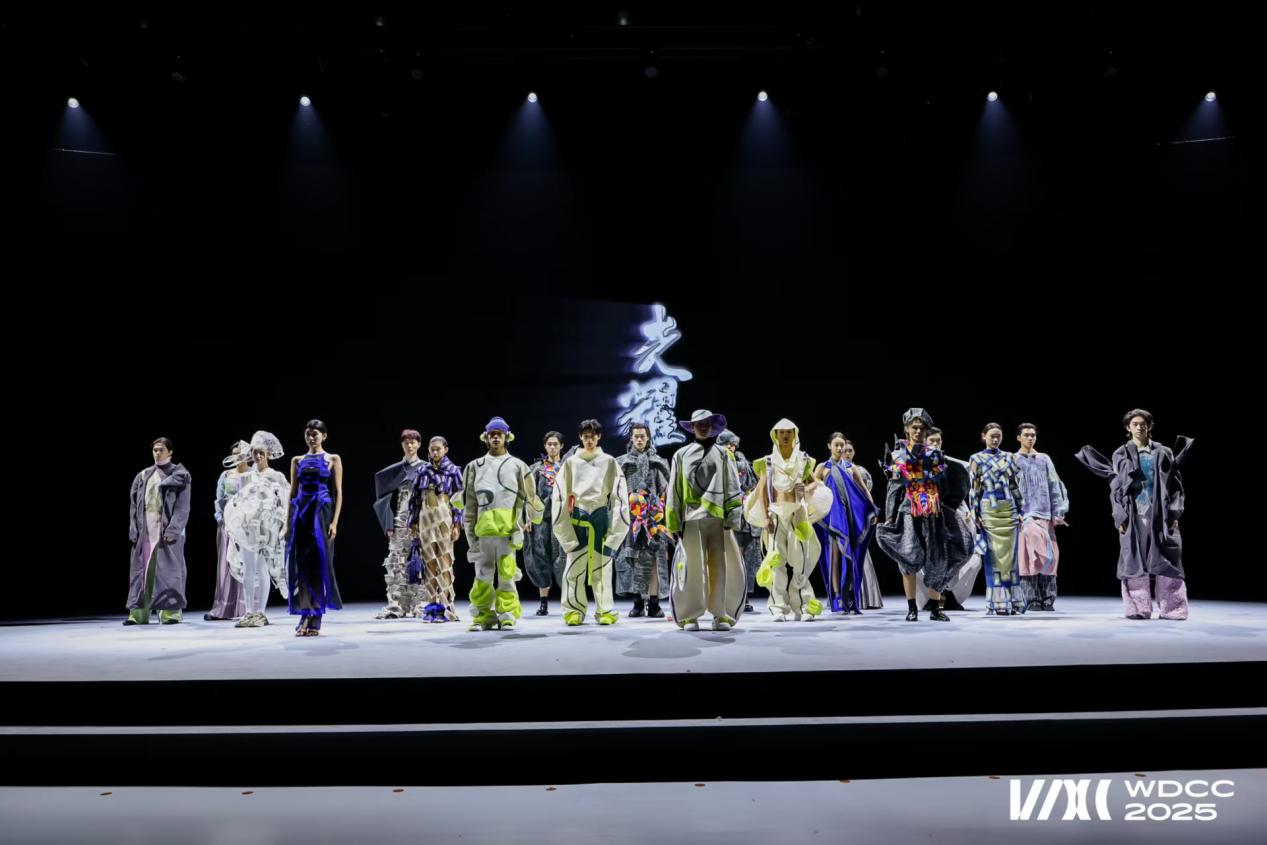
In the ‘Dream and·Domain’ act, AIGC-generated weightless lines drifted across the screen, while feathered textiles unfurled according to algorithmic airflow. This collection was a veritable ‘duet between AI and fashion,’ where smart fabrics morphed in real-time into smoke-like life forms. Combined with mirror-like water ripple effects, it crafted a surreal dreamscape. This was not merely a visual feast, but a vivid demonstration of Donghua's excellence in AI-aided design and intelligent textiles.
The show culminated with the ‘Light and Radiance’ series. Attire adorned with crystals refracted controlled lighting into dazzling specks of color, mirroring the brilliant nightscapes of Shanghai's Five New Cities. On the digital backdrop, imagery of blooming Magnolia flowers intertwined with landmarks from these new urban centers, conveying both the core of ‘Shanghai Culture’ and the vibrant pulse of urban renewal. Adding a deeply personal touch, the soundtrack was entirely composed by Donghua students, who skillfully wove traditional ‘Jiangnan silk and bamboo melodies’ with electronic sounds, creating a unique auditory signature for ‘Haipai Fashion.’
For years, the university has leveraged its comprehensive, innovative strengths in ‘Design + Technology’ and ‘Fashion + Technology.’ It remains deeply aligned with Shanghai's development, focusing on aggregating innovative elements, nurturing design talent, conducting forward-looking research, strengthening think tank capabilities, and accelerating industry-education integration. By gathering elite designers and consolidating premium resources, Donghua University consistently delivers outstanding industry-academia-research outcomes, contributing the distinct ‘Donghua Power’ and ‘Donghua Wisdom’ to Shanghai's ascent as a world-class design capital.